

A note from Laurie
This week’s scripts get a little vulnerable. We’re admitting the mistakes designers make, explaining why cheap furniture usually costs more in the long run, and reminding you why that review you keep meaning to leave actually matters. We also have three brand spotlights this week: MaterialWorks on performance fabric, Amer Rugs on hand-knotted rugs, and Jonathan Charles on how furniture gets made. If you only have time to film two, I would start with Common Mistakes Designers Make and Reviews Keep the Lights On.
Ten fresh scripts below. Tap any title to open it. Everyone picks different ones, so your videos stay uniquely yours. Choose the two that fit your voice and your clients best, film them, and tag #idcvideo and @interiordesigncommunity when you post.
Filming tip: wipe your phone’s camera lens with your shirt or a soft cloth before you hit record. Pocket lint and fingerprint smudges are the number one reason at-home videos look blurry, and a five-second wipe fixes it every time. Then tap the screen where your face will be so the phone locks focus and exposure before you start talking.
1. Common Mistakes Designers Make
Hook: Designers make mistakes too. There. I SAID IT.
We spend a LOT of time talking about the value of hiring a designer but that doesn’t mean we magically stop being human once we get a resale certificate.
I hate to say it because I feel super human sometimes BUT we make mistakes too.
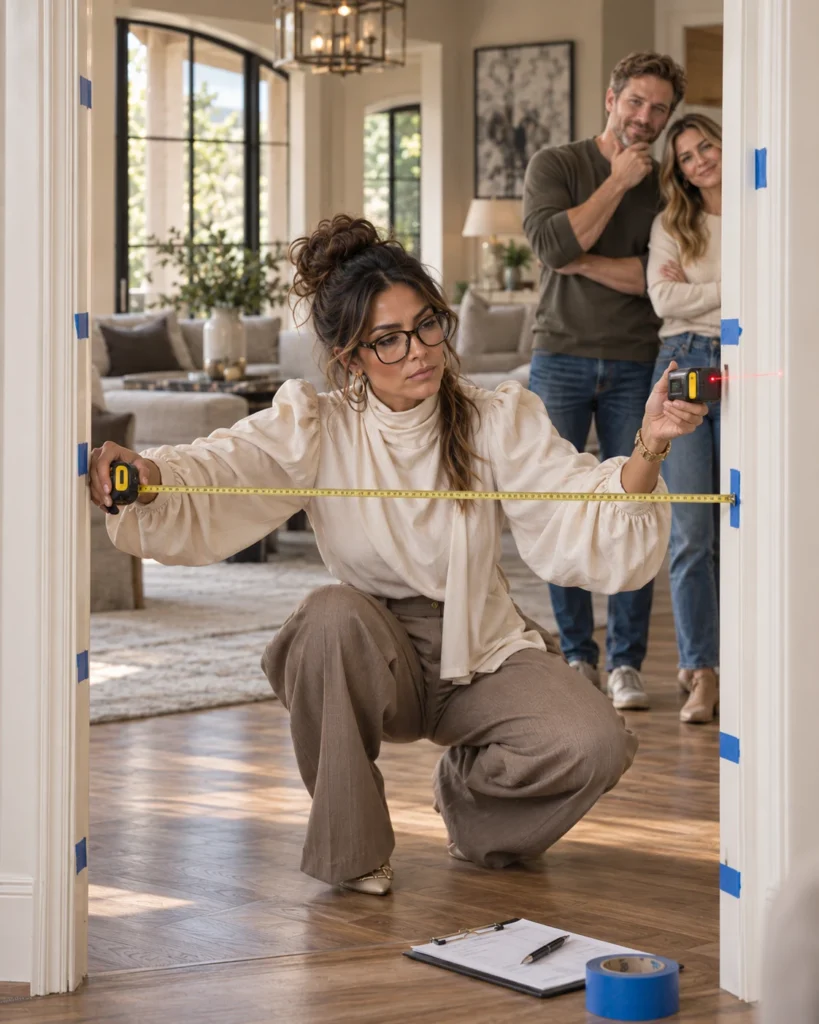
Sometimes we trust a measurement on paper that should have been verified.
Or convince you to fall in love with something before checking the lead time.
We forget to account for the way a door swings.
We specify something gorgeous and then realize…OH. It has to actually fit through your door.
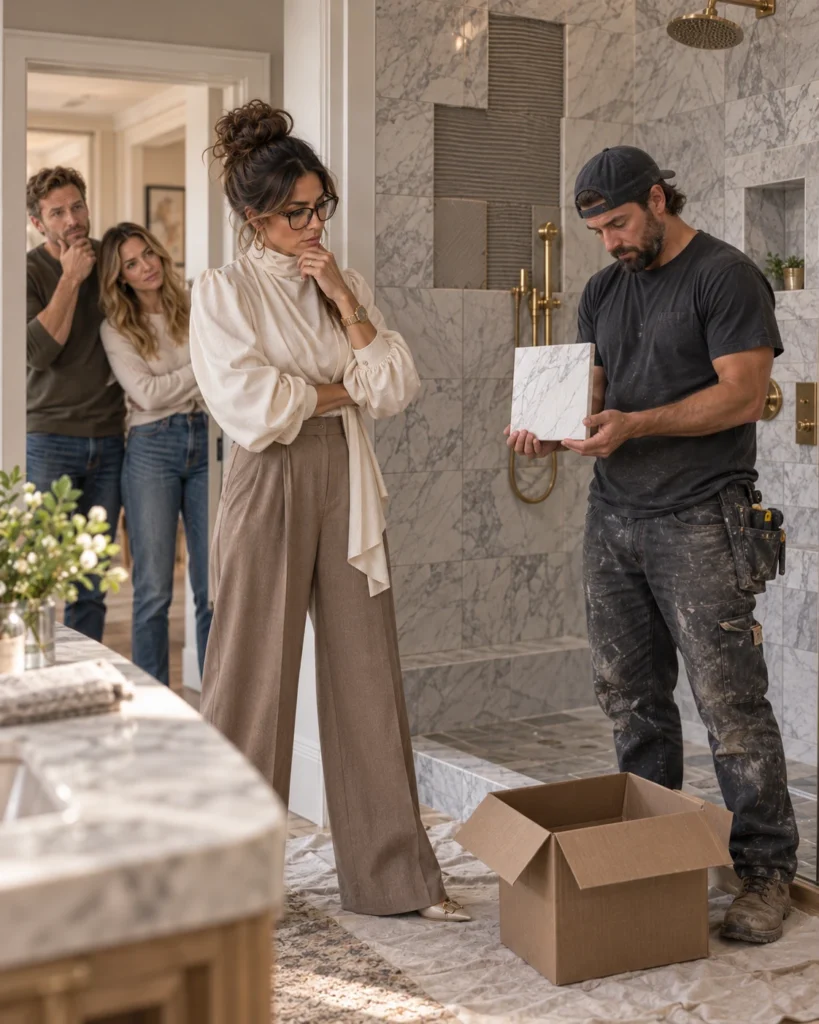
We don’t order enough extra tile for cuts and waste and now the contractor is short.
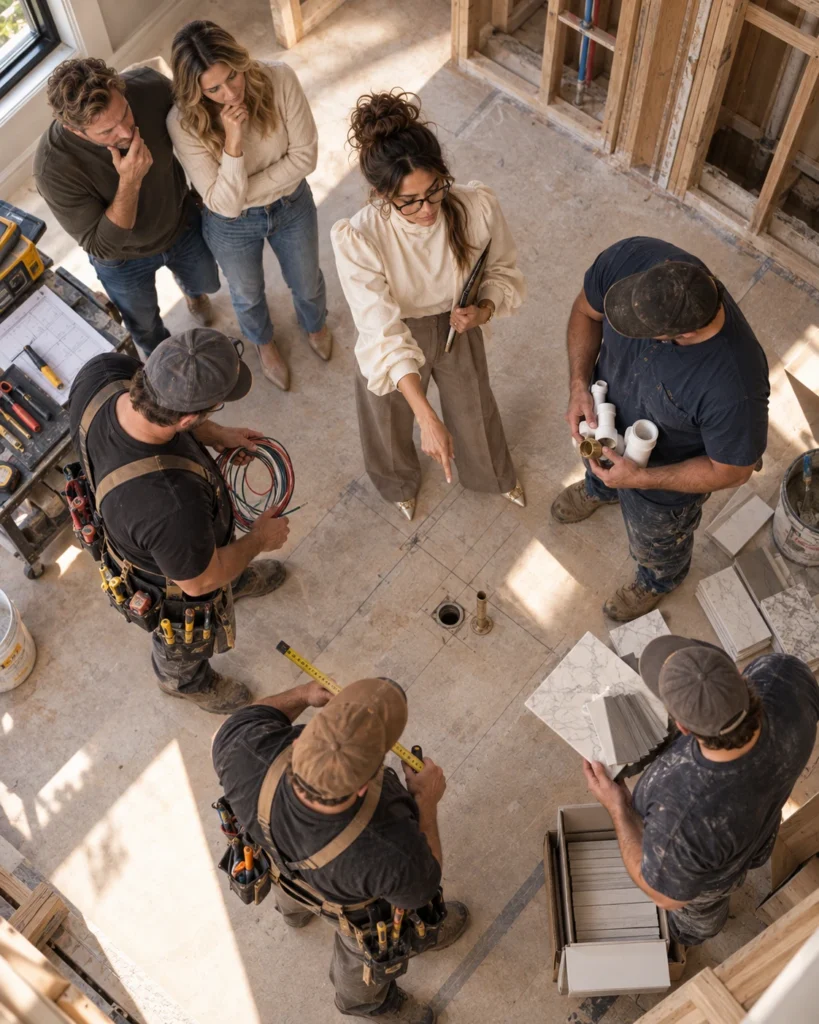
Maybe we wait too long to bring in that contractor, electrician, or other trade.
Even having a ton of experience under our belt does NOT mean that we NEVER make mistakes.
It’s that experience teaches us where the landmines usually are.
We learn to build systems. Double check. Ask better questions. And THAT’S how you know you’re working with a really great designer. When something DOES go wrong, we own it, figure out how to solve it, and create the least amount of impact possible on the rest of the project.
So I don’t promise I’ll be perfect but I DO promise I’ll be professional, own my mistakes, and work my magic to give you the experience and results you hired me for!
Caption
Okay designers, let’s normalize something… Experience doesn’t mean never making a mistake😂 But it should mean having better systems, knowing what to double check, and getting REALLY good at solving problems when they happen. What project mistakes taught you the biggest lesson?
@interiordesigncommunity #idcvideo #designmistakes #interiordesigner #designbusiness
Assets
Press and hold any image on your phone to save it to your camera roll.


2. The Fast Furniture Problem
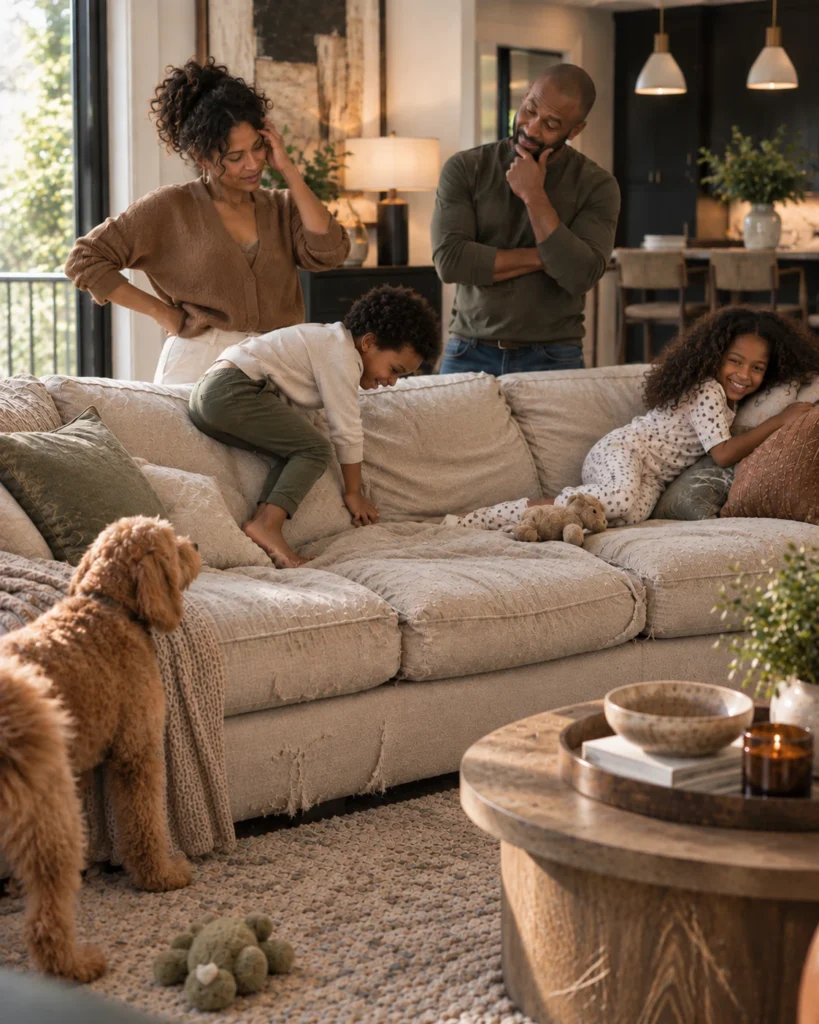
Hook: That $400 sofa might actually be more expensive than the $2,000 one. The math ain’t mathing? Hear me out!
I am NOT going to sit here and tell you that every piece of furniture in your house needs to be expensive.
It doesn’t. There are product ranges for a reason.
There is absolutely a time and place to save.
But there IS a reason designers look beyond just the price tag.
We’re looking at how something is CONSTRUCTED. And this isn’t just designer talk. It really DOES matter.
What is the frame made from? How are the joints connected? Can the cushions hold their shape? Can the finish be repaired?
What happens to this thing after five years of actual LIFE being lived with it?
Because if you buy the $400 version three times while that better-made $2,000 piece could still be sitting in your house doing its job…which one was actually cheaper?
And don’t get it twisted expensive doesn’t automatically equal quality either.
The goal is NOT “buy expensive furniture”.
The goal is to understand what you’re paying for and spend your money where longevity actually matters. I want you to get the best bang for your buck!
Is there somewhere you know you’d be okay saving on and another area where you’d ALWAYS invest?
Caption
I love a good deal as much as anybody but CHEAP and GOOD VALUE are not the same thing 👀 Sometimes saving money upfront means buying the same thing again three years later. How painful! Where are you willing to save and where do you buy the good stuff? Let’s talk about it.
@interiordesigncommunity #idcvideo #qualityfurniture #furnituredesign #interiordesigner
Assets
Press and hold any image on your phone to save it to your camera roll.

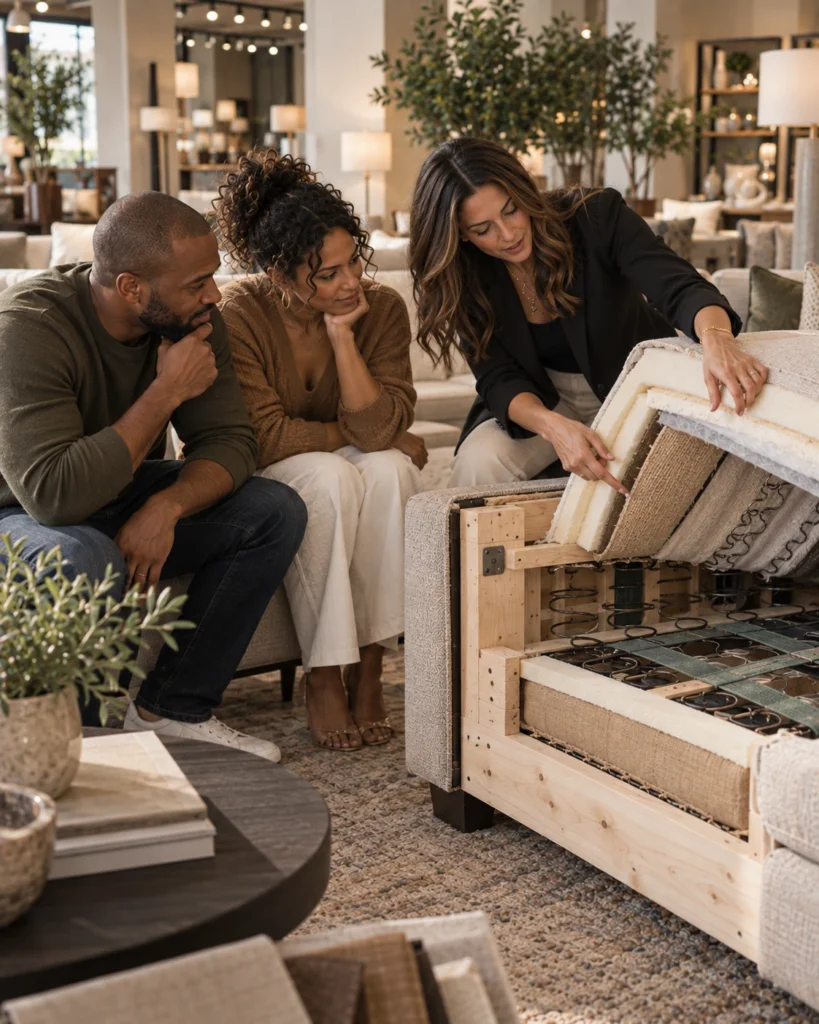
3. Which Flooring Where?
Hook: As designers we don’t pick flooring by asking which one is prettiest. We ask what is this ROOM going to do to this FLOOR?
Because every flooring material has a different job.
Hardwood gives warmth, character, and the ability to refinish it but water damage and scratching have to really be considered.
Engineered wood gives you that real wood surface with more dimensional stability which can make it useful in installations where solid wood may be trickier.
Porcelain and ceramic tile? Durable, water resistant, and GREAT for bathrooms and mudrooms but harder and colder underfoot.
Natural stone is beautiful because no two pieces are exactly alike, but depending on the stone, you may also be signing up for sealing and maintenance.
LVP can be incredibly practical for kids, pets, basements, and high traffic but quality varies A LOT.
Laminate can give you durability at a lower price point but you need to understand its moisture resistance and whether it can be repaired.
Epoxy is seamless, durable, and easy to clean which can make it fantastic for garages and utility spaces.
And of course we can’t forget carpet. It still has a job to do! Great for bedrooms, stairs, acoustics, warmth, and comfort.
If you ask me “what’s the best flooring?” There isn’t one.
There’s a best floor for what your particular space needs to be able to survive and how life is going to treat it.
I know it sounds overwhelming but don’t worry, I got you!
Caption
Pretty is only ONE item on the flooring checklist. Water, traffic, pets, kids, maintenance, acoustics, comfort, and how the room is actually used all matter. There is no universal “best flooring” and I will die on that hill 😂 Don’t worry I’ll help you figure it all out!
@interiordesigncommunity #idcvideo #flooringdesign #materialselection #interiordesigntips
Assets
Press and hold any image on your phone to save it to your camera roll.




4. Reviews Keep the Lights On
Hook: Do you want to do something REALLY nice for a small business without having to spend another dollar?
Leave a review!
I know.
You already told your designer you loved your house.
You hugged us at install.
You sent the sweet text. Maybe even a hand written thank you card.
And LET ME TELL YOU we LOVE that!
But that review you keep meaning to write?
That also matters more than you probably realize.
Because when our NEXT potential client is trying to decide whether to trust us with their home and their MONEY that’s a big decision and they don’t know us yet.
But you do and your experience helps them make that decision.
I can’t tell you how much that helps our business not just grow but thrive.
Reviews create trust. Referrals bring people through the door. And repeat clients? Those are GOLD!
When somebody calls us back for another room, their vacation house, or the next phase of their project we aren’t starting from zero.
We already know each other. We already have trust.
As small businesses we don’t have endless corporate marketing budgets.
Happy clients talking about us is LITERALLY part of what keeps the lights on.
So if there’s a small business you LOVE I’m challenging you to go write that dang review.
That is more valuable than you can possibly imagine.
Caption
Consider this your reminder to leave that review you’ve been meaning to write❤️ A few thoughtful sentences can help someone feel confident enough to hire a small business they’ve never worked with before. Reviews, referrals, AND those amazing repeat clients really do help keep our lights on. I’m challenging you to go love on a small business today 😊
@interiordesigncommunity #idcvideo #smallbusiness #clientexperience #reviews #interiordesigner
Assets
Press and hold any image on your phone to save it to your camera roll.


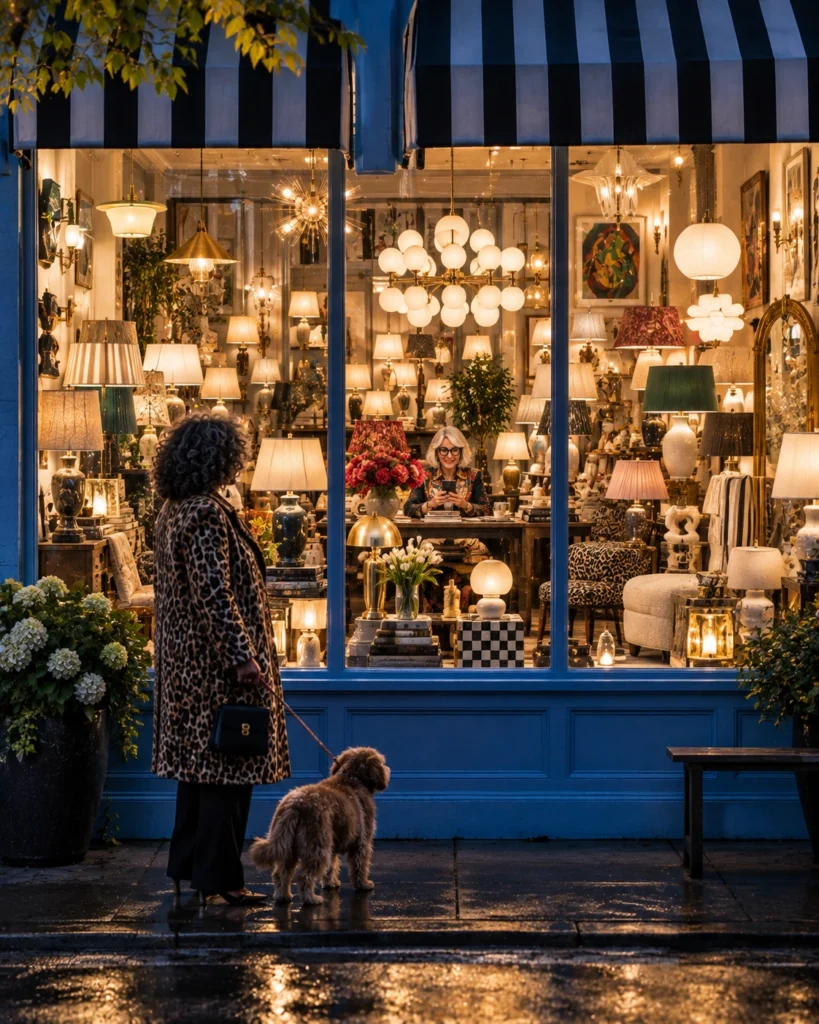

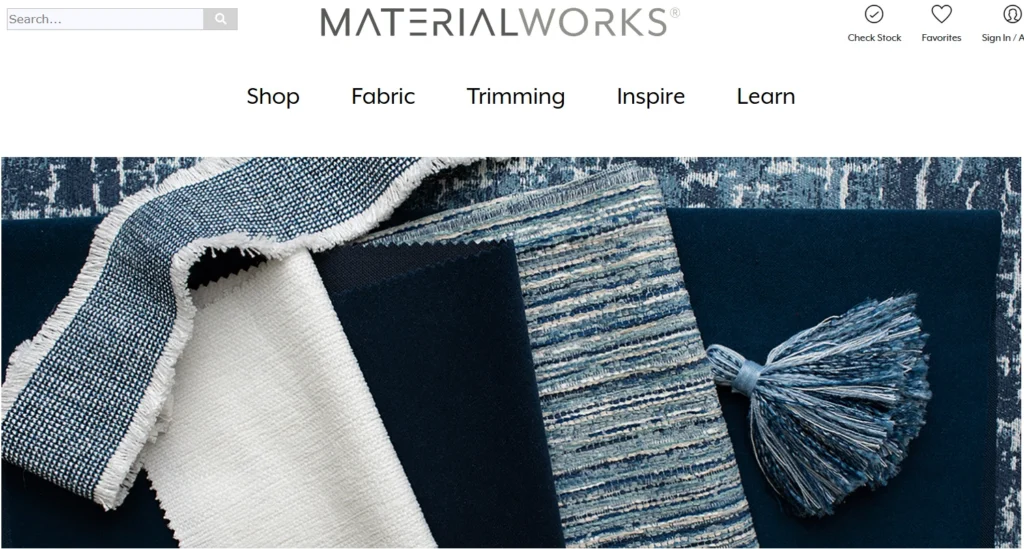
5. What Is Performance Fabric? · MaterialWorks
Hook: “Performance fabric” does NOT mean your toddler can attack the sofa with spaghetti.
I think the word PERFORMANCE has somehow become a little magical in people’s heads.
Like we sprinkle something on a fabric and suddenly it’s indestructible.
Unfortunately that is not what it means.
Performance fabrics are engineered or treated to provide specific qualities like durability, stain resistance, cleanability, liquid resistance, fade resistance, or UV resistance.
But here is the important part. Not every performance fabric performs in exactly the same WAY.
That’s why designers look deeper into the actual specs.
Where are we planning to use it?
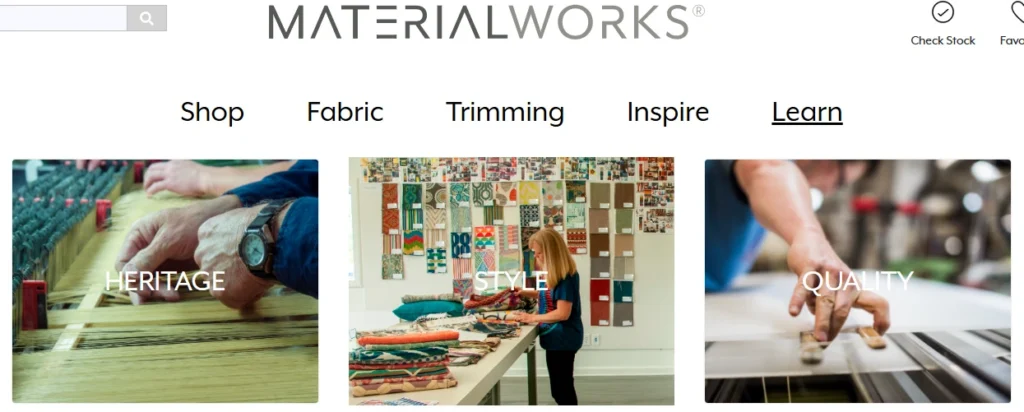
MaterialWorks is a great example because they carry MULTIPLE performance textile lines including InsideOut, Ease Eco, Crypton Home, and Sustain.
I love working with companies like MaterialWorks because they make it easier for designers to navigate all of those options and find the right textile for each job.
So we aren’t just asking “Is it performance?”
We’re asking “What does it perform AGAINST?”
Are we worried about stains? Fading? Moisture? Heavy everyday use? That’s what I need to know.
Because your white sofa and your spaghetti loving toddler deserve a fighting chance with each other.
Caption
PERFORMANCE does not equal indestructible 😂 The important question is what kind of performance you actually NEED
MaterialWorks offers designers a huge range of textiles including performance options designed for the realities of how people actually live. Because kids, pets, spills, and LIFE should absolutely be part of the fabric conversation and they understand that.
@interiordesigncommunity #idcvideo #materialworks #performancefabric #textiledesign #interiordesign
Assets
Press and hold any image on your phone to save it to your camera roll.


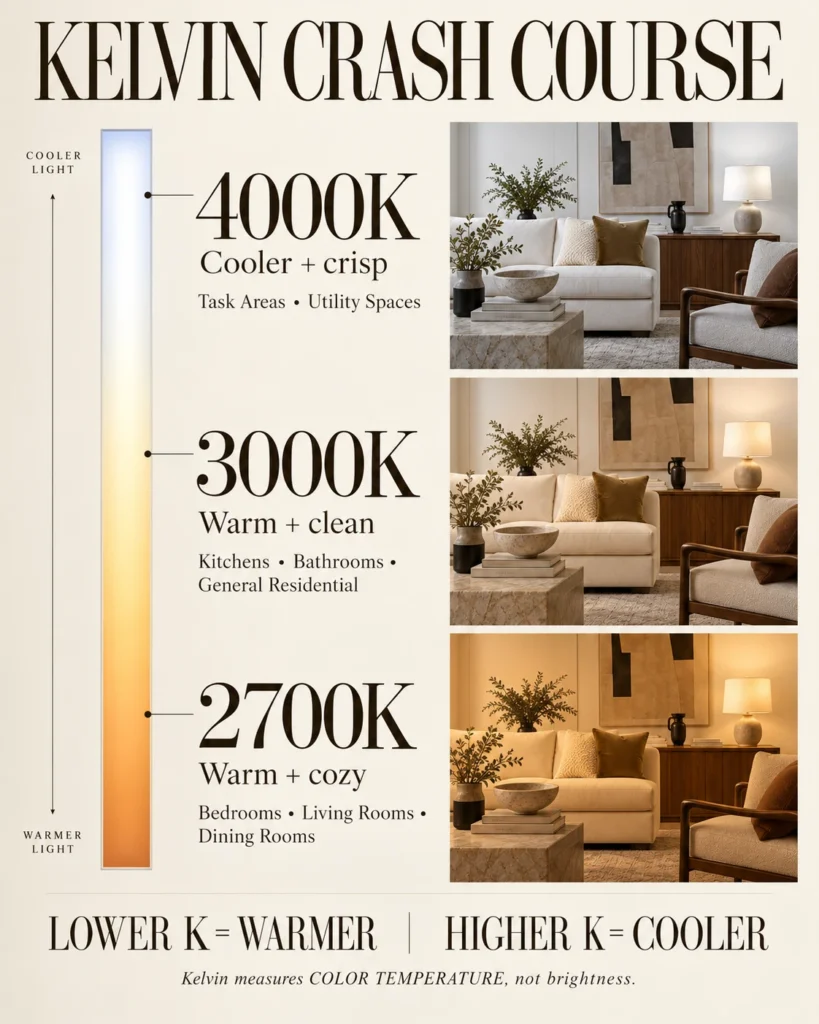
6. The Kelvin Crash Course
Hook: It might not be your paint color that is wrong. It might actually be your LIGHT BULB.
Welcome to your 30 second crash course on Kelvin. Because this tiny little number can have a really big impact on a room.
Kelvin measures the COLOR TEMPERATURE of light.
Lower numbers look warmer. Higher numbers look cooler.
So around 2700K gives you that warm, cozy, slightly golden residential lighting.
3000K is still warm but a little cleaner and crisper.
4000K starts moving noticeably cooler and whiter.
And this matters because lighting completely changes how you perceive EVERYTHING around it.
Your white paint. Your wood tones. Your countertops. Your fabrics. Even your SKIN.
And PLEASE don’t randomly mix color temperatures throughout one open space unless there is a very good reason for it.
Nothing ruins a beautiful lighting plan faster than one rogue icy-blue bulb hanging out with all the warm ones.
So when you and I are picking pretty fixtures I’ll also be thinking about the actual LIGHT that will be coming out of them.
Tell me, are you team 2700K or 3000K?
Caption
The prettiest light fixture in the world can’t save the wrong bulb 😂 2700K = warmer. 3000K = a little cleaner. 4000K = noticeably cooler. And YES, it can absolutely change how your paint and finishes look. What Kelvin are you using at home?
@interiordesigncommunity #idcvideo #lightingdesign #colortemperature #interiordesign
Assets
Press and hold any image on your phone to save it to your camera roll.


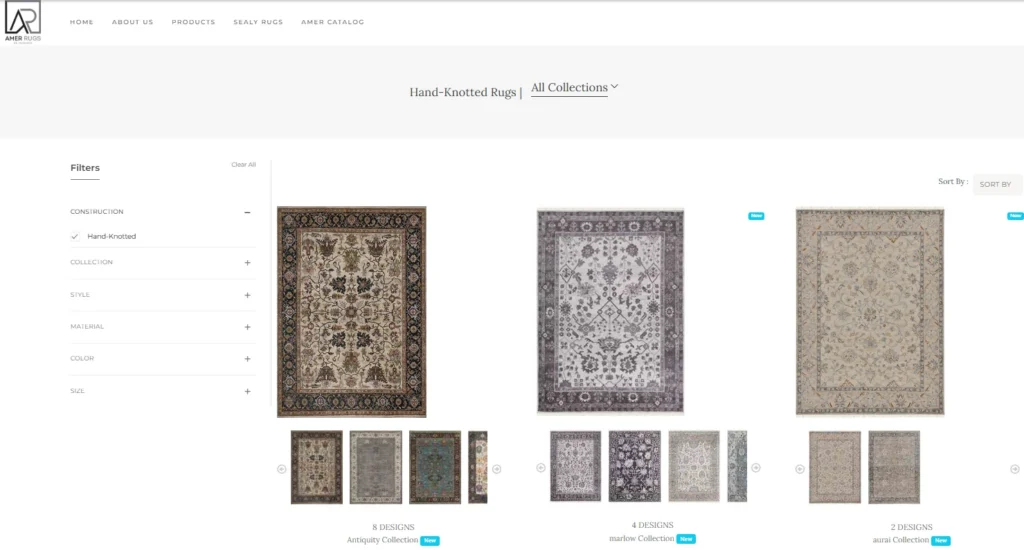
7. Inside Amer Rugs Hand Knotted Designs · Amer Rugs
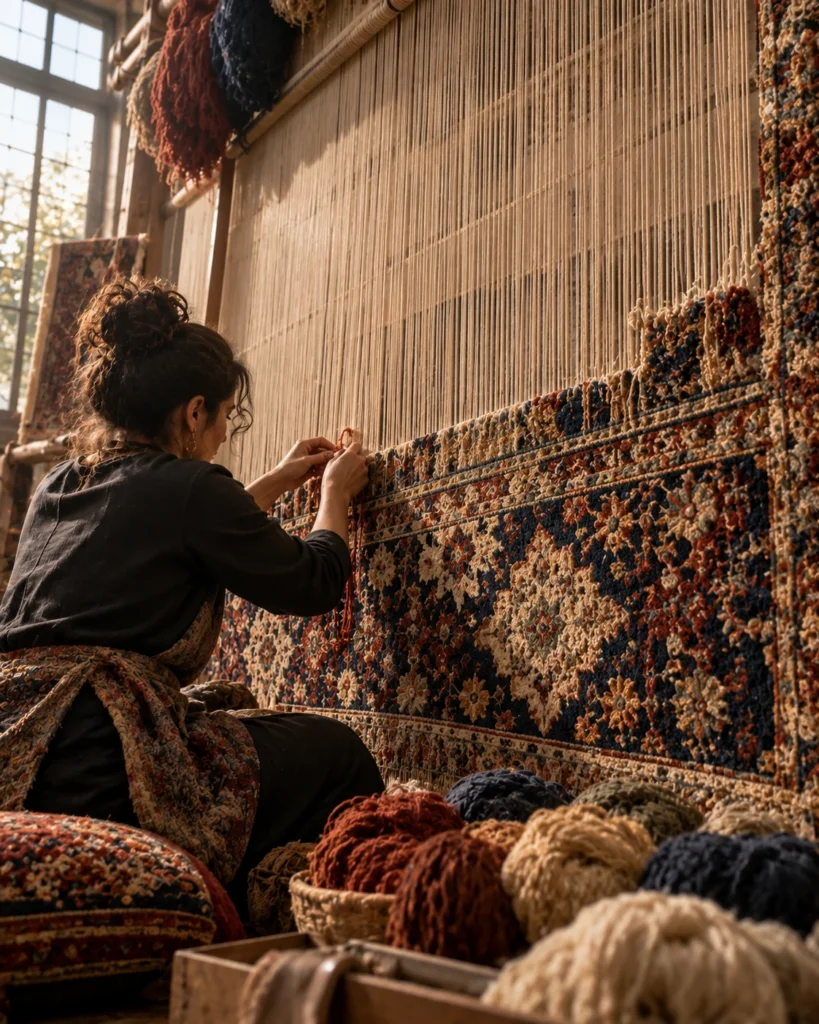
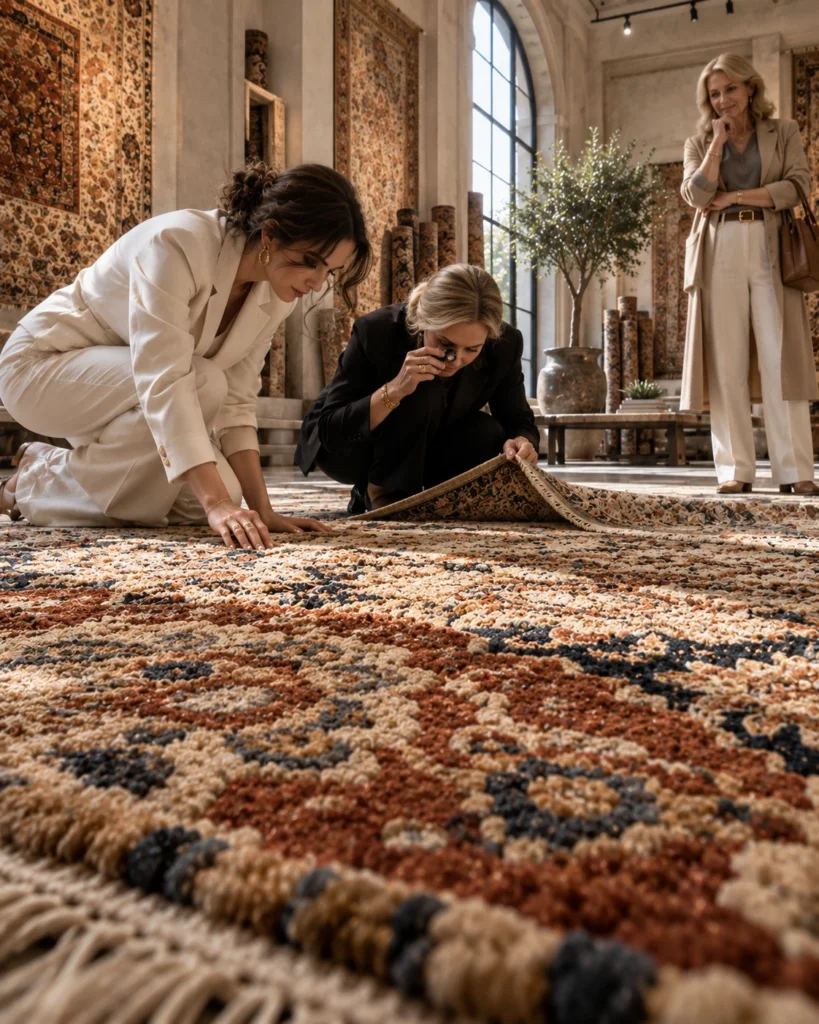
Hook: You’re not just looking at a rug. You’re looking at thousands and thousands of tiny knots tied by HAND.
This is one of those design elements I wish everyone could see being made at least once.
A hand knotted rug is truly built KNOT BY KNOT on a loom by skilled artisans.
That is VERY different from a machine made rug or even a hand tufted rug.
That doesn’t diminish the art of those pieces but hand knotted rugs really do take SO much time and skill to create.
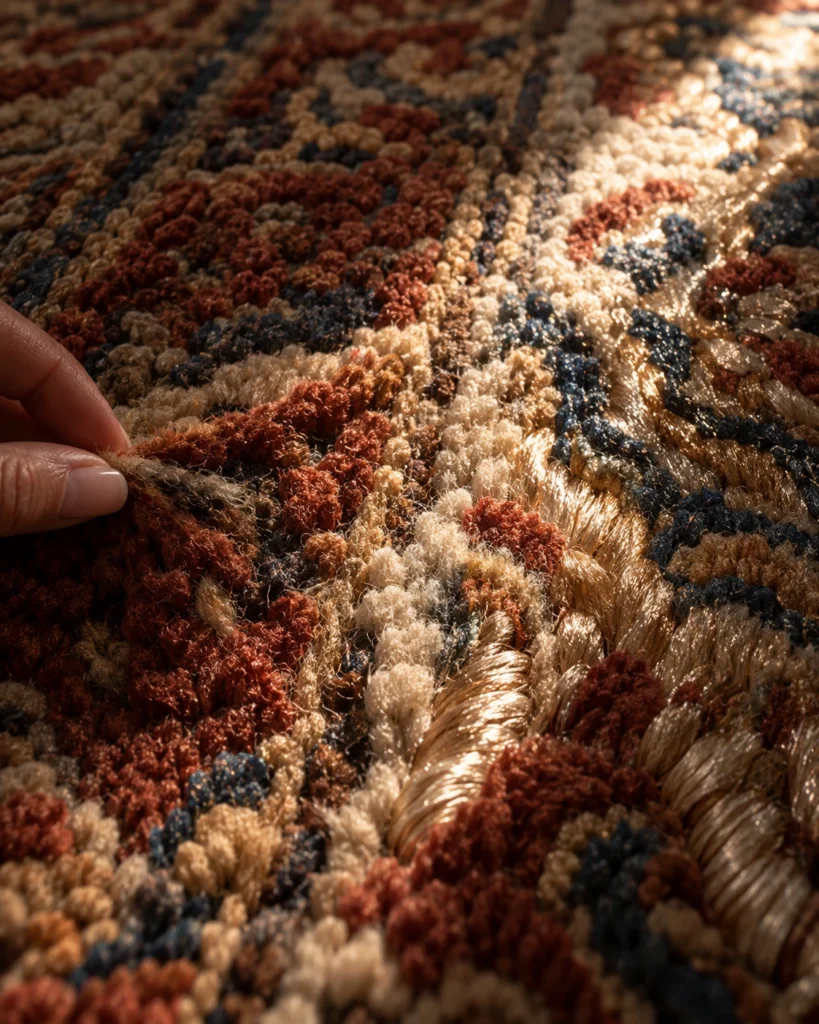
I love Amer Rugs because they have hand knotted collections using materials like handspun New Zealand wool and silk and when you see one up close THAT is when you start noticing what went into it.
The texture.
The variation in the yarn.
The way silk catches light differently from wool.
The tiny irregularities that remind you there were actual human hands making this thing.
Some designs even use carving to create a high low effect in the pile.
This is why designers get weirdly excited and start flipping up rug corners in showrooms.
We’re not only looking at the pattern.
We want to know HOW it was made and we’d be more than happy to talk your ear off about it!
Caption
Once you understand how a hand knotted rug is made you look at it VERY differently. There are so many hands, hours, and tiny details hiding inside something we eventually just call “the rug” 😍
Amer Rugs creates hand knotted designs using materials including wool and silk combining traditional rug making craftsmanship with designs made for today’s interiors.
@interiordesigncommunity #idcvideo #amerrugs #handknottedrugs #rugdesign #interiordesigner
Assets
Press and hold any image on your phone to save it to your camera roll.
8. What Is COM Fabric?
Hook: Designers basically have our own language and I’m pretty sure COM is one of those terms nobody ever explains to anyone OUTSIDE the design world.
So let’s decode it.
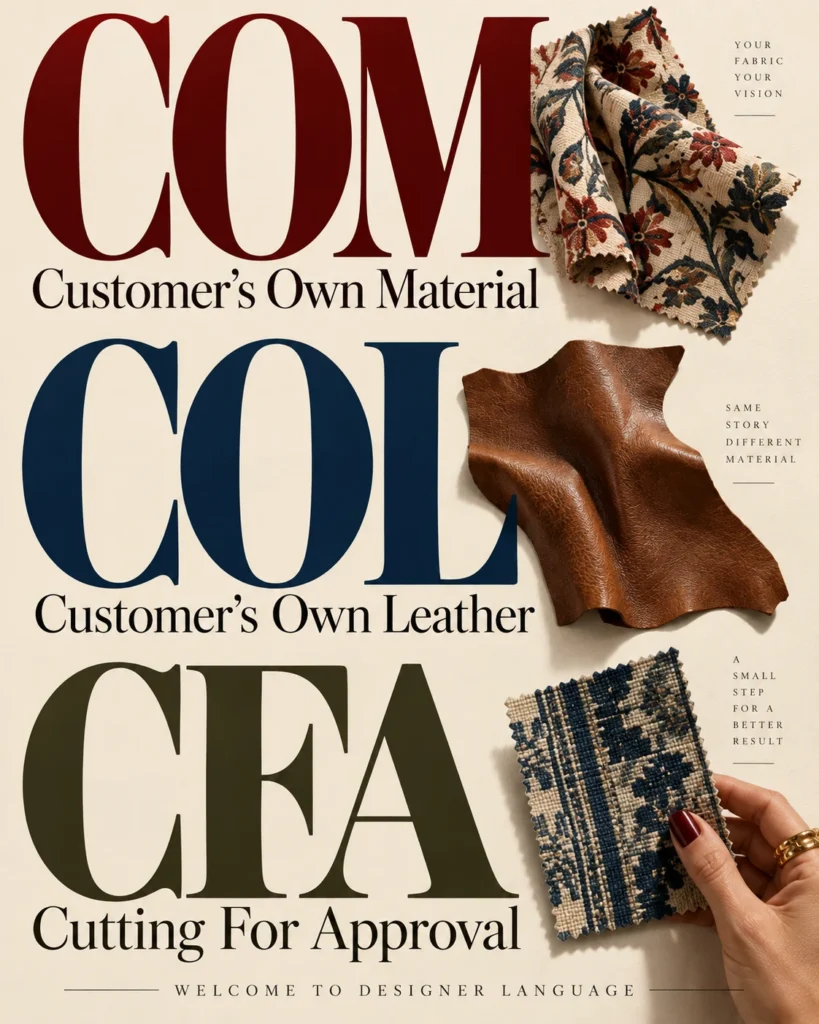
COM means Customer’s Own Material.
Basically, you love the chair but… you DON’T want one of the manufacturer’s standard fabrics.
You want to send them YOUR fabric to upholster it.
That is COM.
And then the fun begins because we have to figure out how much fabric the piece requires.
Then there are all the OTHER questions. Does the fabric have a pattern repeat? Does it need to be matched across cushions? Is the fabric wide enough? Is it actually appropriate for upholstery?
You might have also heard your designer request a CFA, aka a Cutting For Approval. This is so we can approve the actual piece of material before production continues.
Were you scratching your head about COL? That’s Customer’s Own Leather. That one is always fun.
This is why designers occasionally sound like we’re speaking in airport flight codes.
COM, COL, CFA…welcome to the glamorous world of specifying furniture.
Designers, chime in, what acronym confused you when you first started?
Caption
COM=Customer’s Own Material. COL=Customer’s Own Leather. CFA=Cutting For Approval. And suddenly your designer sounds like they work for the FBI 😂 There is a whole language behind custom furniture that clients rarely get to see. Which design acronym do you want me to decode next?
@interiordesigncommunity #idcvideo #customfurniture #textiledesign #interiordesign
Assets
Press and hold any image on your phone to save it to your camera roll.

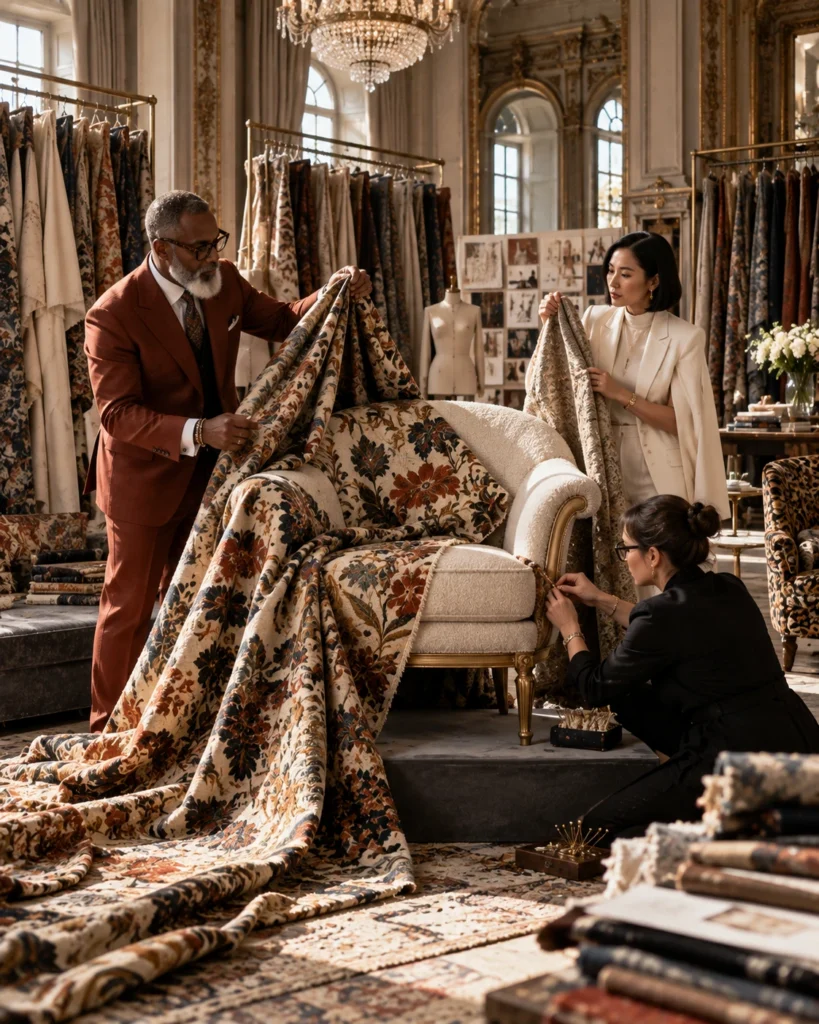

9. How Furniture Gets Made · Jonathan Charles
Hook: Some furniture is manufactured but SOME furniture is basically created by ARTISTS.
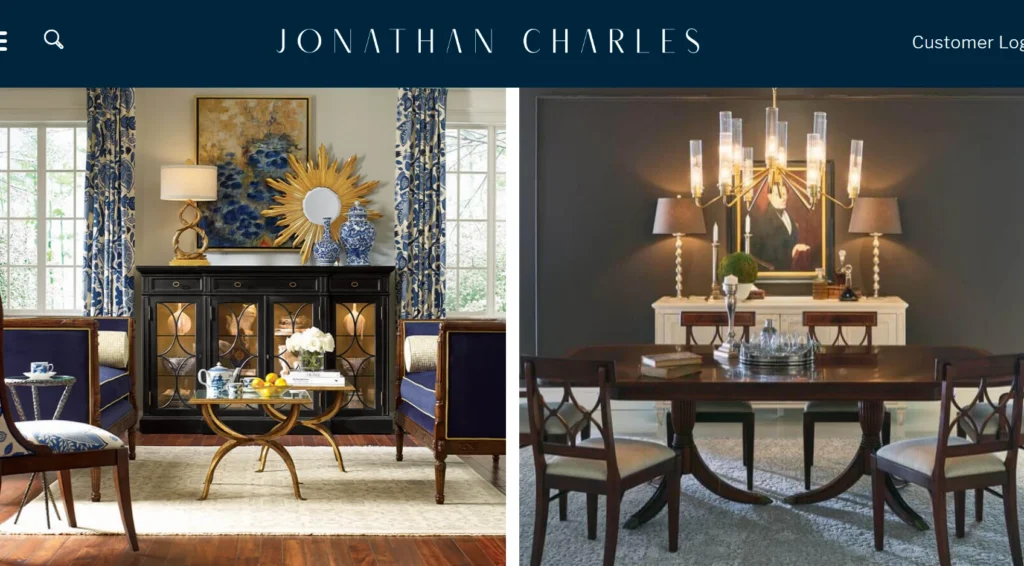
And Jonathan Charles is SUCH a good example of why I think people should know what actually goes into making a piece.
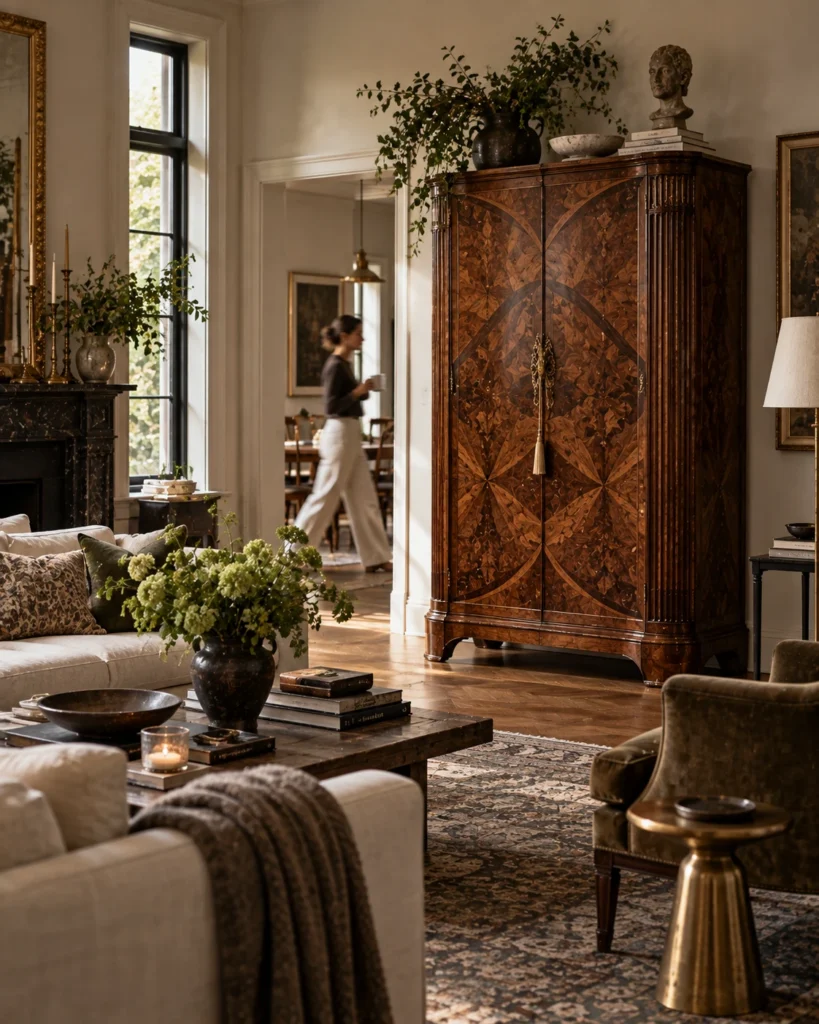
Because when you look at a finished piece you see a beautiful cabinet or table.
But I encourage you to really look at the DETAILS.
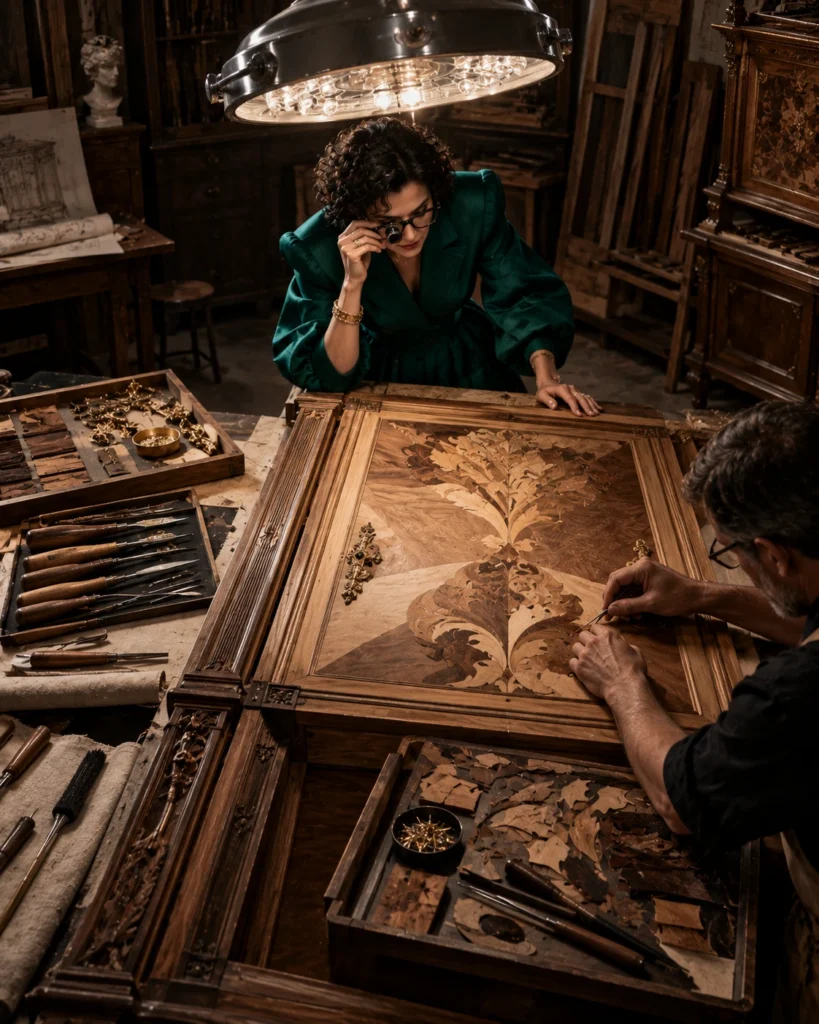
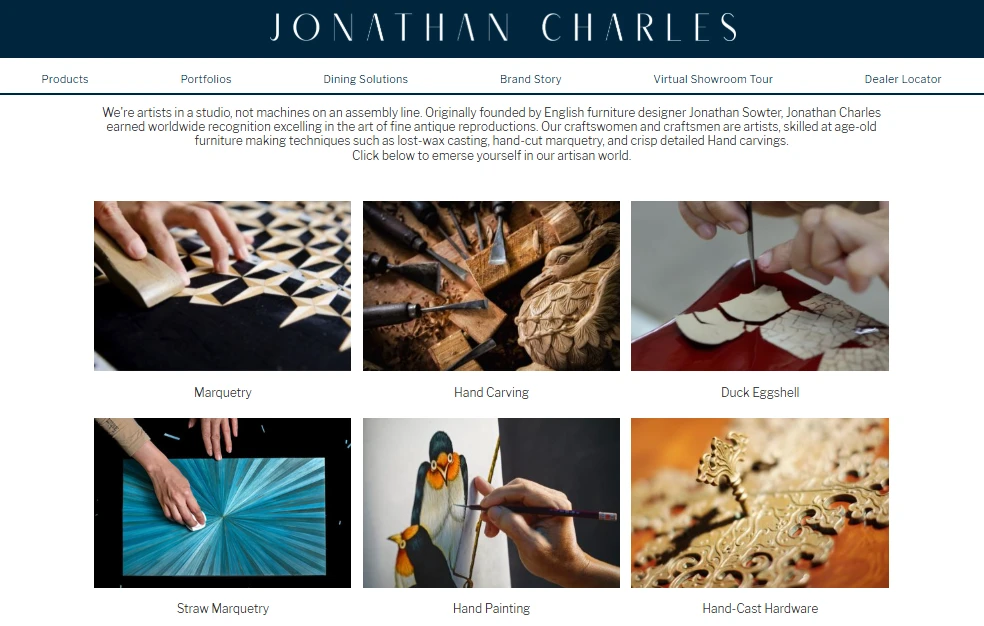
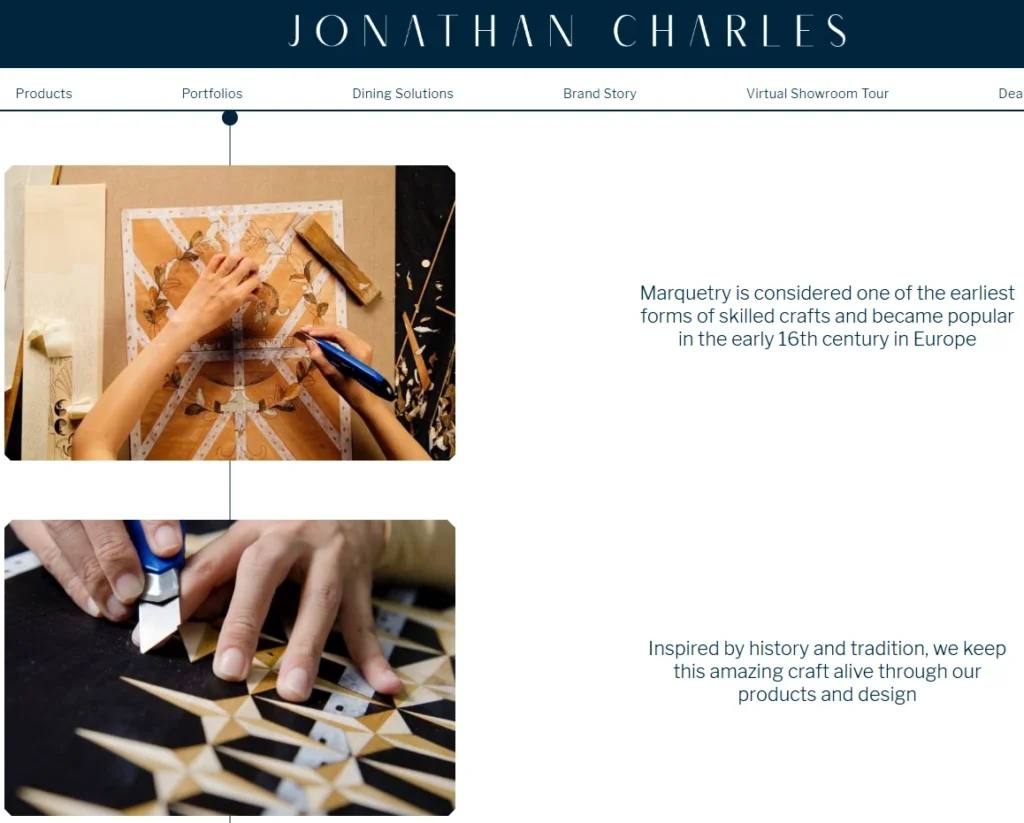
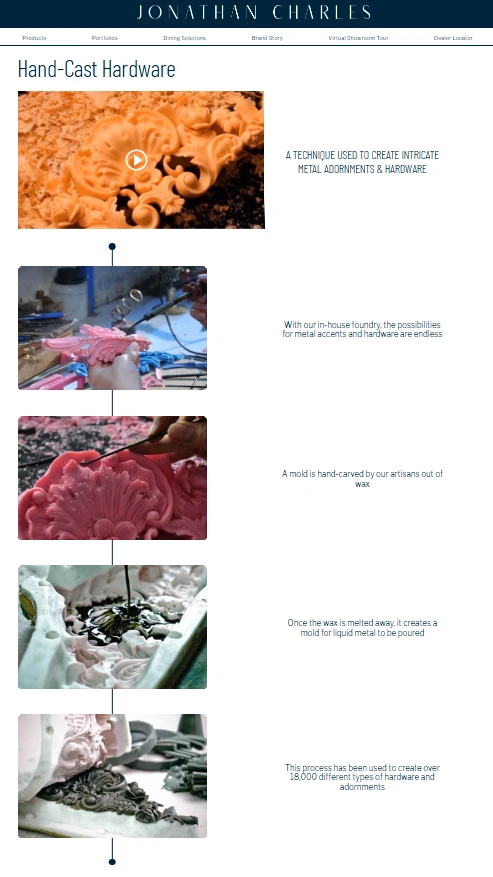
Jonathan Charles uses traditional techniques like hand cut marquetry, detailed hand carving, and lost wax casting.
Marquetry alone is fascinating.
Thin pieces of veneer are cut and arranged to create patterns and imagery in the surface of the furniture.
And then don’t get me started on the hardware.
Jonathan Charles is known for creating custom hardware as part of the design rather than treating the handle or hinge like an afterthought.
That’s the difference between looking at furniture as simply something that fills a space and looking at it as a masterpiece.
The more you understand how something was made the more you start seeing the details that set one piece apart from another.
Is there a piece of furniture in your home that you would actually call art?
Caption
HANDCRAFTED furniture is the behind the scenes design stuff I just love 😍 Once you understand what actually went into making a piece you have a WHOLE different appreciation for it.
Jonathan Charles creates furniture using traditional craftsmanship techniques including marquetry, carving, and detailed finishing turning pieces we use every day into something that can feel a whole lot more like art.
@interiordesigncommunity #idcvideo #jonathancharles #craftsmanship #furnituredesign
Assets
Press and hold any image on your phone to save it to your camera roll.
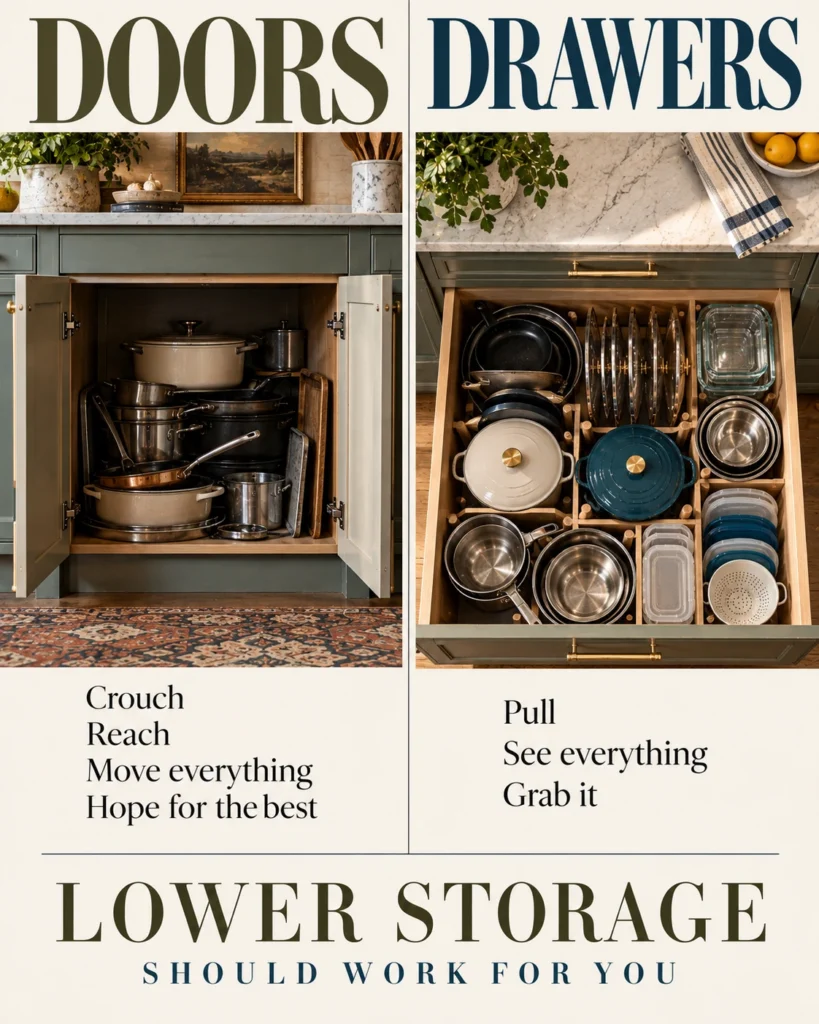
10. Why Drawers Beat Doors
Hook: I will choose a giant kitchen drawer over a lower cabinet door almost EVERY time.
And I have a practical reason.
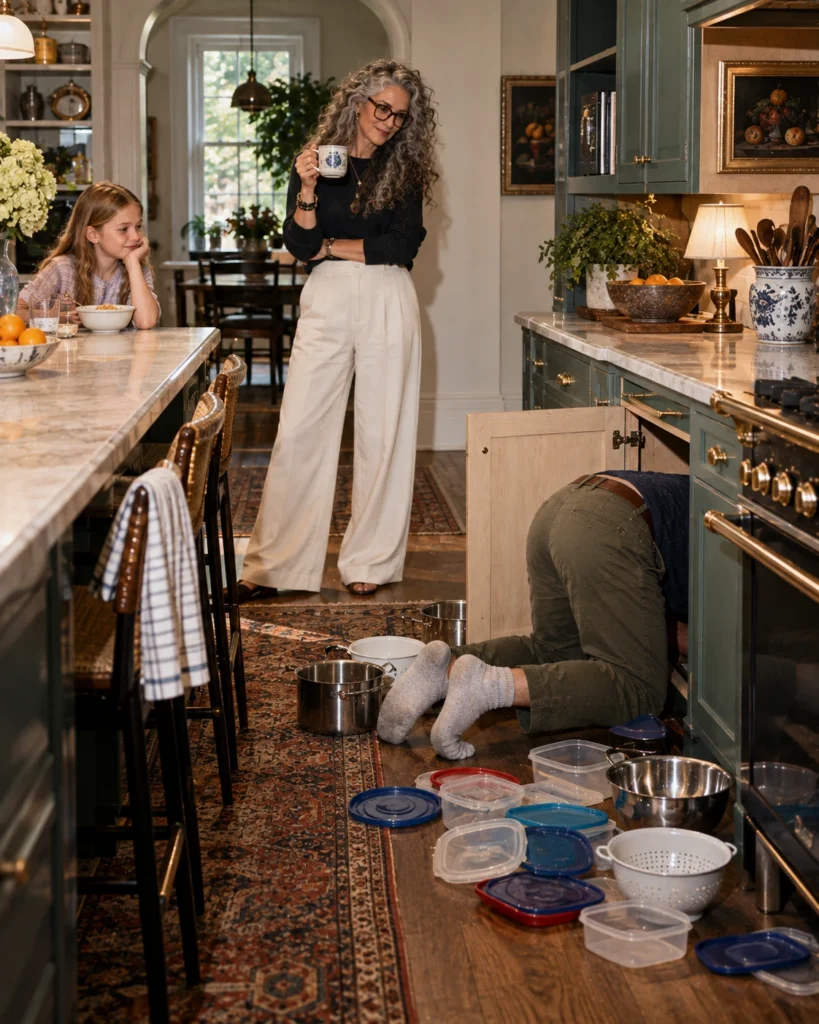
Think about a traditional lower cabinet.
You open the doors.
You crouch down.
You move the items that are in front.
You stick half your body into the cabinet trying to find the pot lid that has apparently entered another dimension.
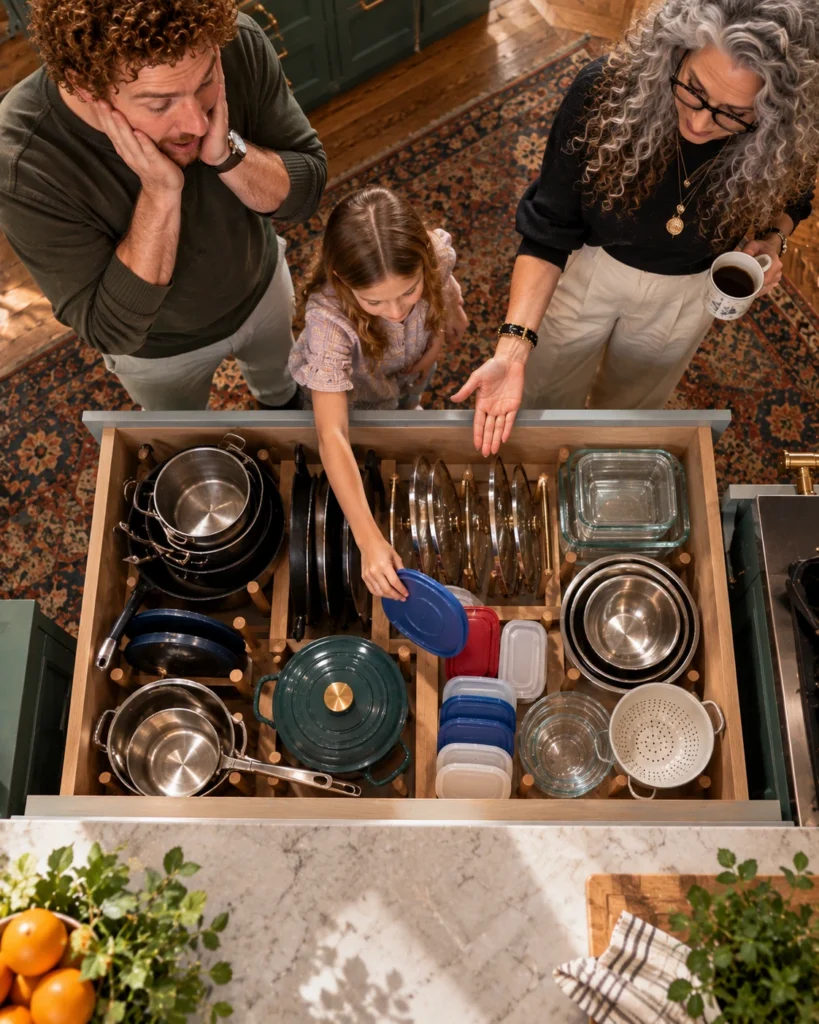
Now make that storage a deep drawer.
You pull it out and suddenly the contents come to YOU.
You can see everything from above.
Pots. Pans. Dishes. Food containers. Small appliances.
That’s why designers think about cabinetry as more than a bunch of boxes with pretty doors.
We’re thinking about ergonomics.
Visibility.
How often you use something.
How heavy it is.
And whether you’re going to curse us every time you have to get something out.
Doors absolutely still have their place.
But for frequently used lower storage?
Give me DRAWERS all day long.
And I’m going to try to convince you to be team drawers too!
Caption
If you have to crawl halfway inside a cabinet to find a Tupperware lid we have failed 😂 Deep drawers let the contents come to YOU which is exactly why designers think so much about what goes inside those pretty cabinet fronts. Team DRAWERS or team doors?
@interiordesigncommunity #idcvideo #kitchendesign #cabinetry #interiordesigntips
Assets
Press and hold any image on your phone to save it to your camera roll.
Stuck on any of these?
Bring it to office hours, Tuesday at 12:00pm ET, or submit a question ahead of time on the hub.