
A note from Laurie
This week’s scripts are about the parts of a project nobody notices until something goes wrong. Baseboards, dye lots, the zipper hiding under your sofa, and the strike-off that catches an expensive mistake before it happens. We also have three brand spotlights: Interlude Home on acrylic furniture, Fine Art Handcrafted Lighting on how a chandelier actually gets made, and Oscar Isberian Rugs on why two rugs can look alike and cost wildly different amounts. If you only have time to film two, start with Scope Creep Is Stressing Out Your Designer and Why Do Some Rugs Cost $500 and Others $50,000?, because both explain something your clients ask about constantly but rarely understand.
Ten fresh scripts below. Tap any title to open it. Everyone picks different ones, so your videos stay uniquely yours. Choose the two that best fit your voice and your clients, film them, and tag #idcvideo and @interiordesigncommunity when you post.
Filming tip: Turn on Do Not Disturb (or Airplane Mode) before you hit record. A text alert or phone call popping up mid-take is the most common reason a good take gets ruined, and you have to start over.
1. Why Do We Have Baseboards?
Hook: Why are we always putting this strip of wood around EVERY single room in our house?
Baseboards are one of those things we see every single day and might never think twice about.
They’re just…there.

Running along the bottom of almost every wall in your house.
But they’re actually doing several jobs for us.
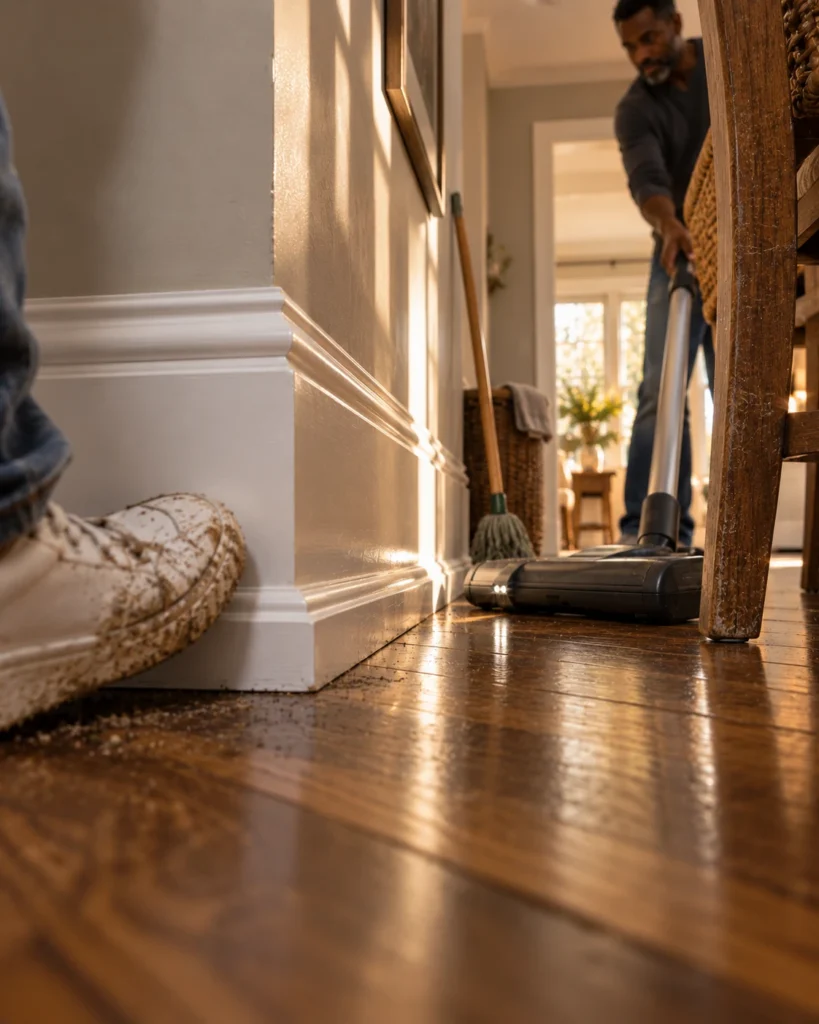
First, think about how much abuse the bottom of your walls take.
Vacuum cleaners hit them. Mops hit them. Shoes hit them. Furniture gets pushed against them.
Historically, baseboards helped protect that vulnerable bottom section of the wall from all of that everyday wear and tear.
BUT they’re ALSO hiding something.
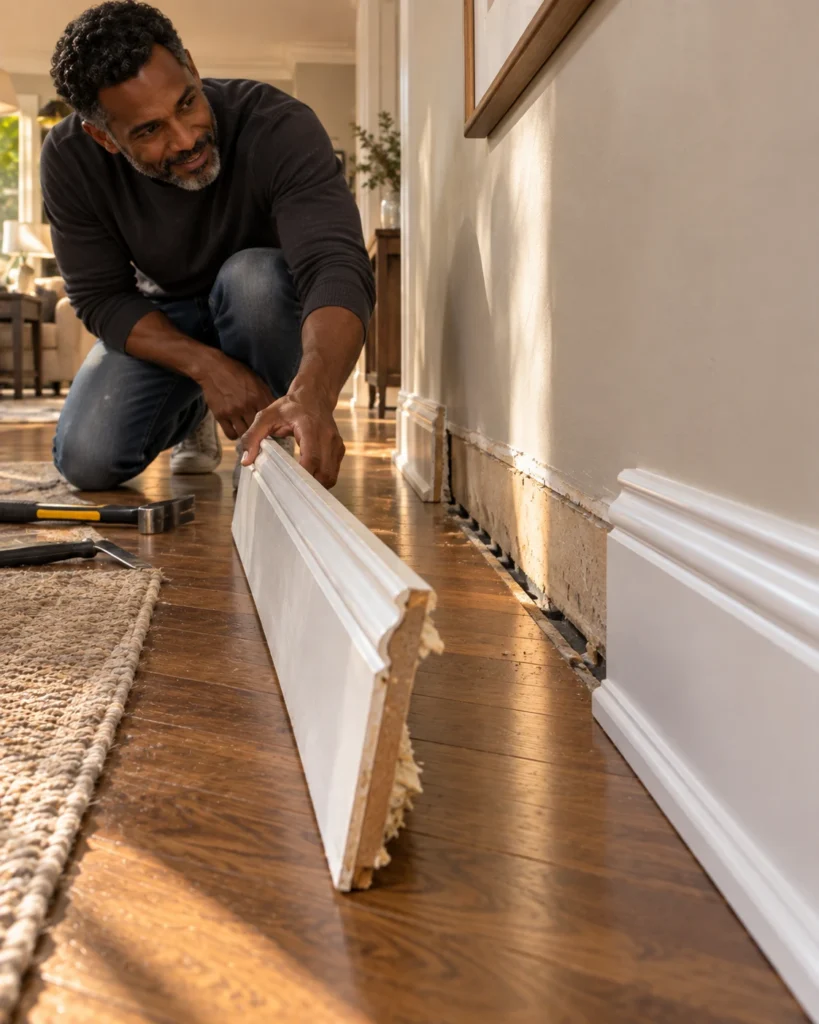
Your wall and your floor do not meet in one magically perfect little line.
Depending on the materials being used there may be small gaps, rough edges, or some room intentionally left for the flooring to expand and contract over time and with temperature changes.
And trust me we don’t really want to look at any of that.
So the baseboards cover that transition and give us a nice clean finished edge.
But HERE is where designers start having a little fun with something that began as simply functional.
Baseboards have become an architectural detail.
We can change the height, thickness, profile, material, and how they relate to the door and window casings around them. They’re an accessory!
A tall detailed baseboard can reinforce a more traditional room while a really simple profile can completely change the feeling of a modern space.
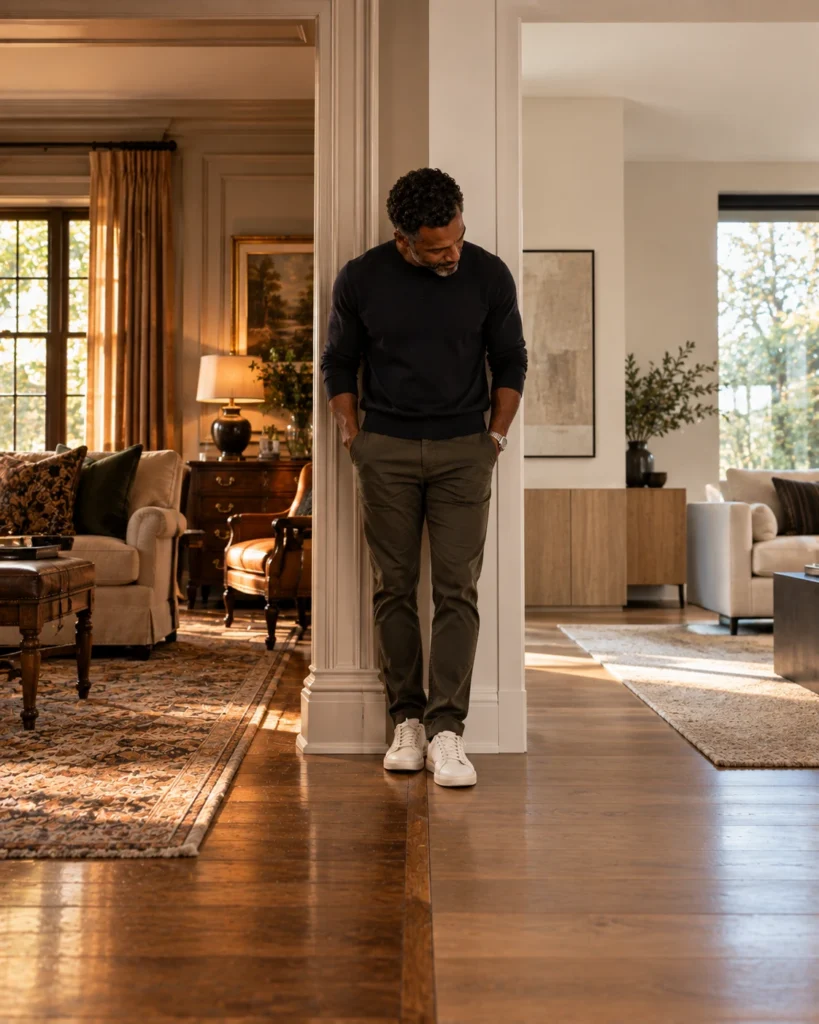
And this is one of those little details that can make a house feel really cohesive when it’s carried throughout.
So YES, baseboards are protecting your walls and hiding some of the less glamorous parts of construction.
BUT they’re ALSO part of the architecture and we are not leaving them out of our decision making process.
And now I apologize because you’re probably going to start judging everybody’s baseboards to figure out what you like and what you DON’T!
Caption
Baseboards are EVERYWHERE and somehow we just collectively agreed not to question them lol They protect our walls, hide the not so pretty transition between the wall and floor, AND add an architectural detail to the room. Now that I’ve pointed them out you’re going to notice everyone’s baseboards. Sorry not sorry 😂
@interiordesigncommunity #idcvideo #baseboards #interiordesigntips #architecturaldetails
Assets
Press and hold any image on your phone to save it to your camera roll.

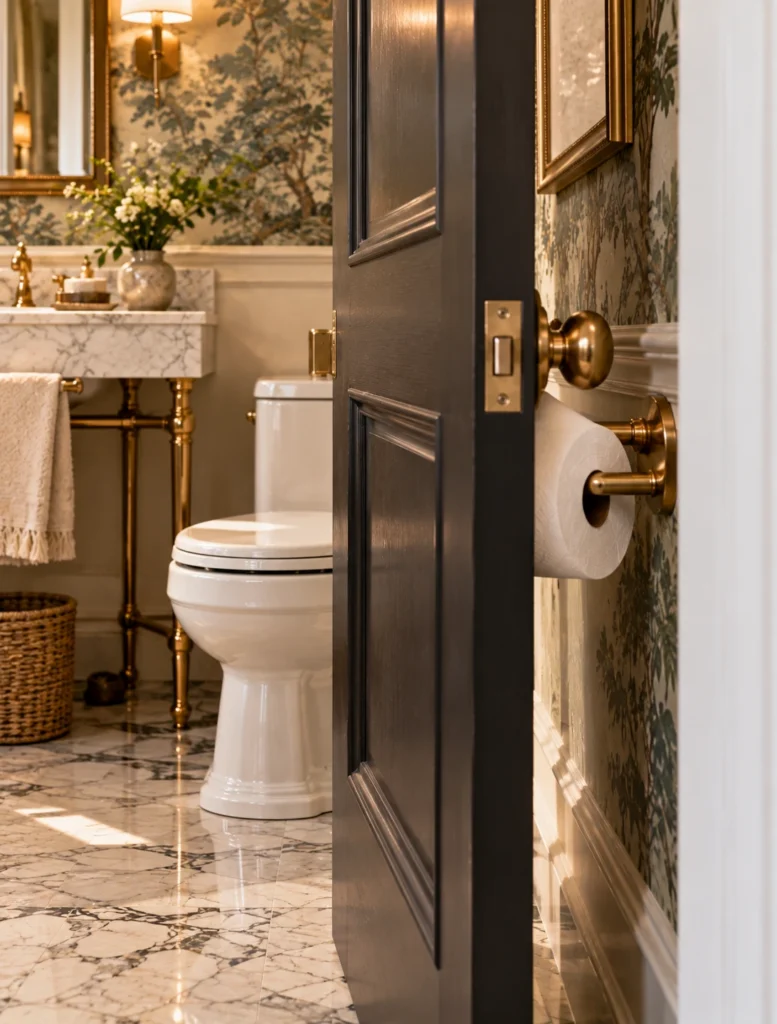
2. The Great Toilet Paper Debate
Hook: No, I don’t mean should you put the roll on over or under.
I mean, there IS a wrong place to put your toilet paper holder.
I know this sounds like the tiniest detail we could possibly talk about in bathroom design.
But use a bathroom where the toilet paper holder is in the WRONG place and suddenly it becomes a VERY important detail.
Because where should it actually go?
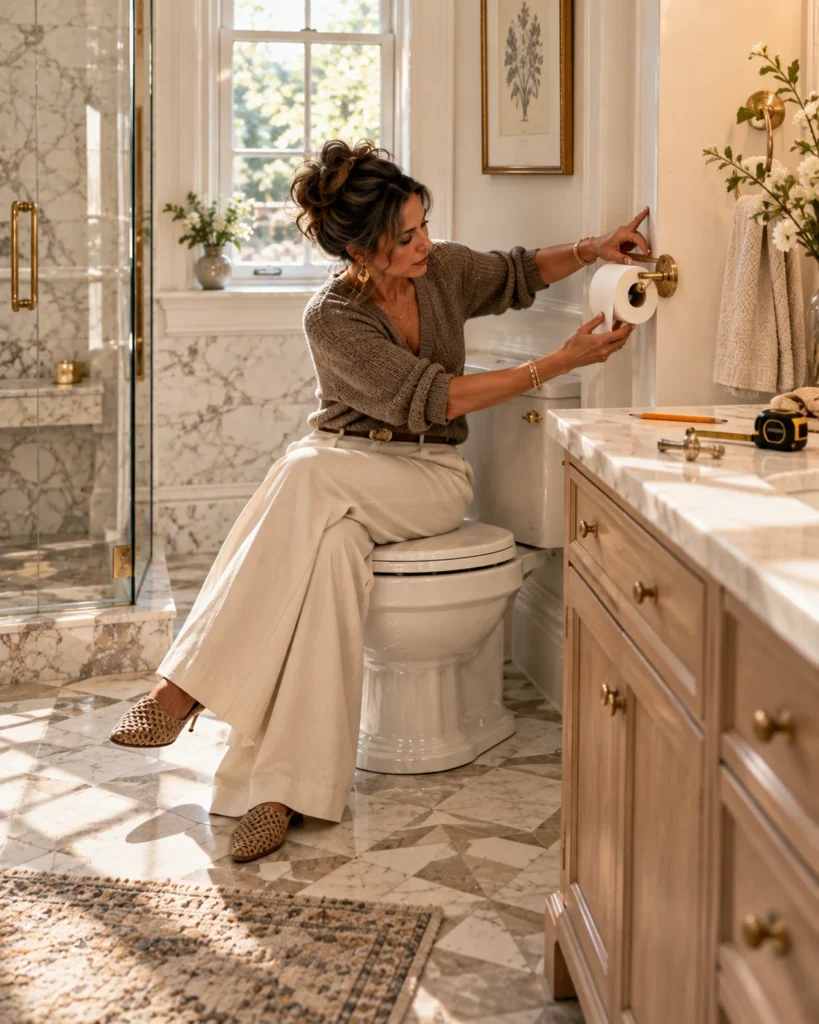
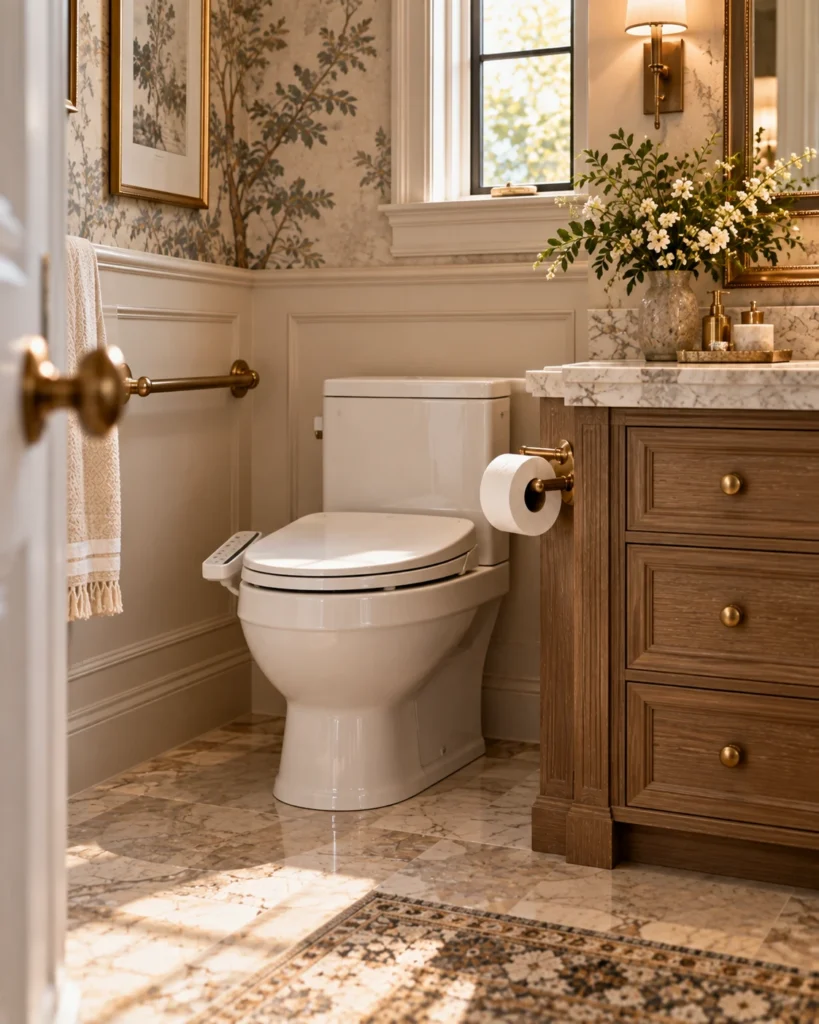
First and foremost somewhere you can comfortably reach it while you’re sitting on the toilet.
I know. Real groundbreaking stuff here.
But think about how many bathrooms have a toilet paper holder tucked behind the toilet because that happened to be where there was wall space.
Now you’re twisting around trying to reach it.
Or maybe it’s way too far forward. Maybe your knee hits it every time you sit down.
Maybe it’s attached to the vanity and the drawer smashes directly into it. Maybe the bathroom door hits it.
These are the kinds of tiny functional details designers are hired to think about, so you don’t have to, when we lay out your bathroom.
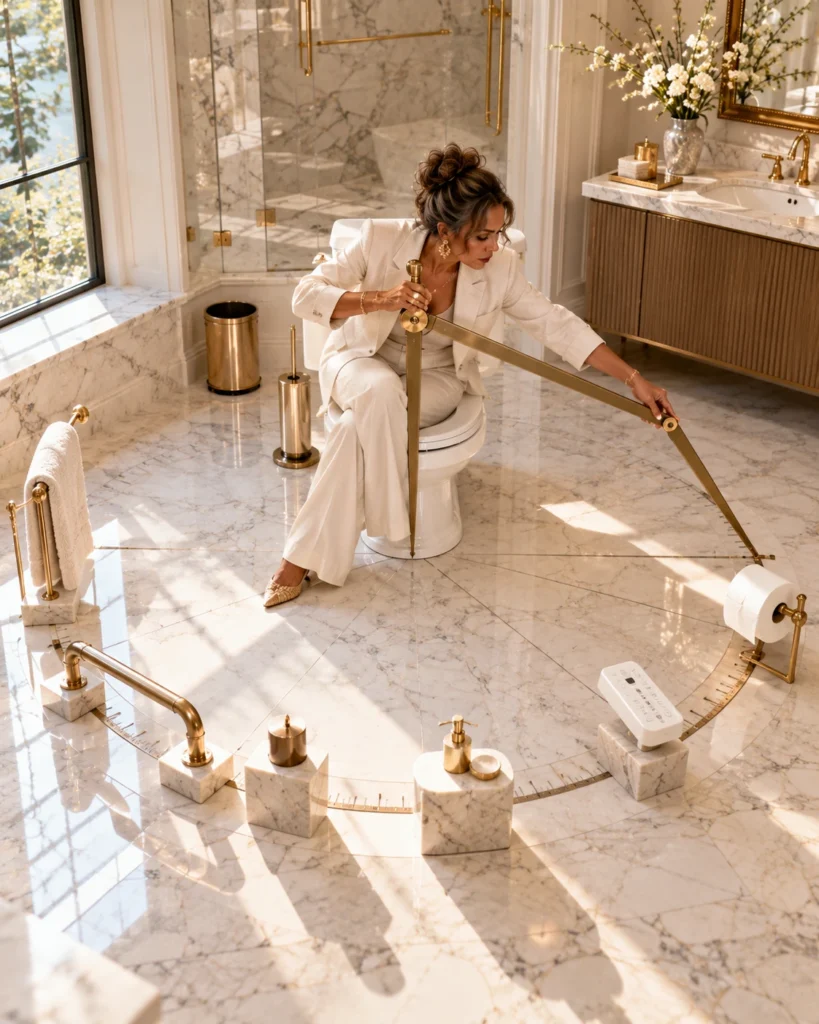
We’re looking at clearances around the toilet.
We’re looking at what’s beside it.
We’re looking at which direction doors and drawers open.
And then we are going to mentally sit our butts on that toilet and ask ourselves WHAT DO I NEED TO REACH?
Toilet paper!
How about a bidet control? Or a grab bar depending on your needs?
We even have to think about where the spare rolls are going to live.
Because a beautiful bathroom can have the most gorgeous marble in the entire world but if using the toilet requires a yoga pose we have really FAILED somewhere.
Good design isn’t just about what you see.
Sometimes it’s about putting the toilet paper exactly where your hand expects it to be.
Caption
YES we really DO need to think about where your toilet paper goes 😂 Because that gorgeous bathroom stops feeling luxurious when you have to twist yourself around just to reach the roll. The boring little decisions are usually the ones you interact with EVERY day. Have you ever used a bathroom where the toilet paper was somewhere absolutely RIDICULOUS? We’re out here saving the world one small detail at a time 😆
@interiordesigncommunity #idcvideo #bathroomdesign #interiordesigntips #bathroomtips
Assets
Press and hold any image on your phone to save it to your camera roll.

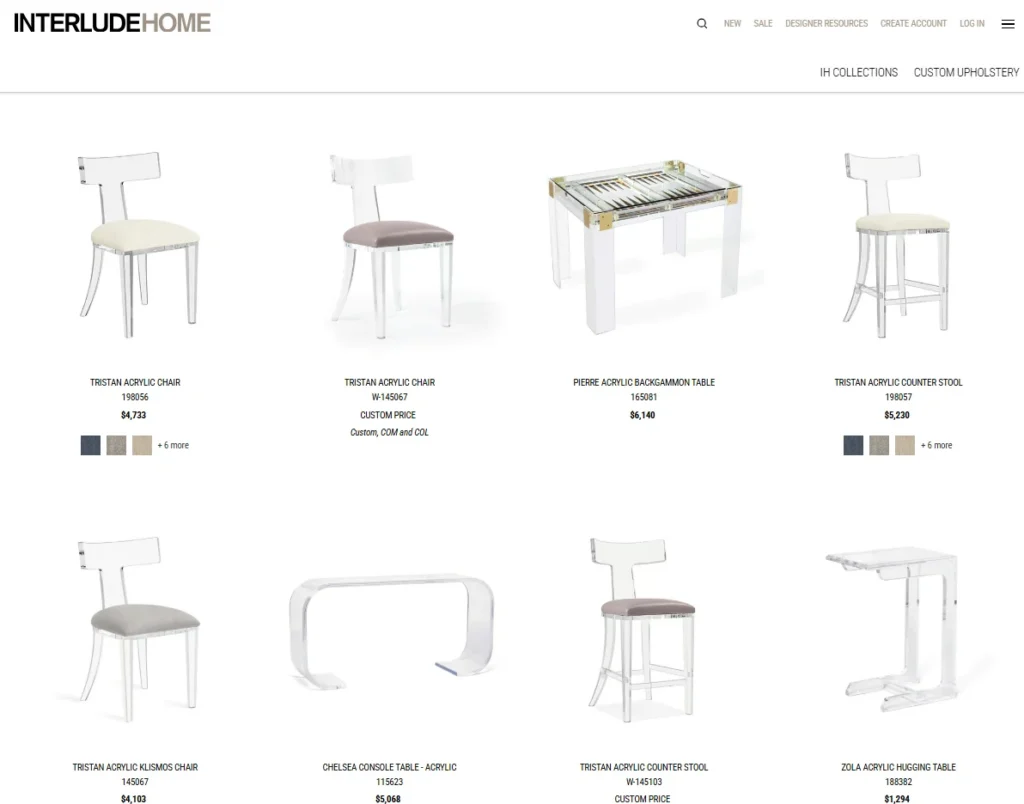
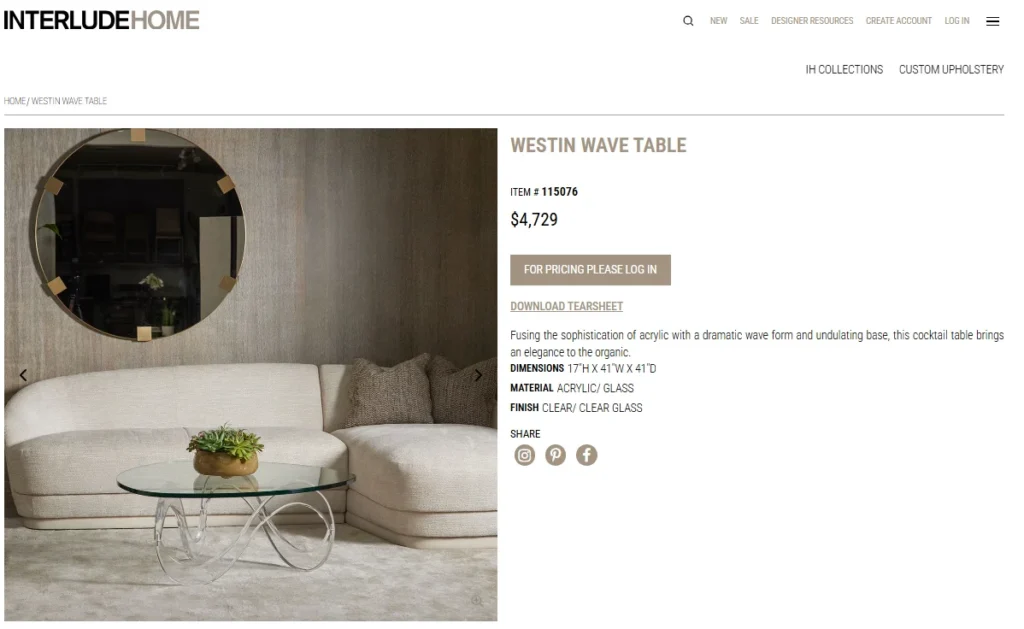
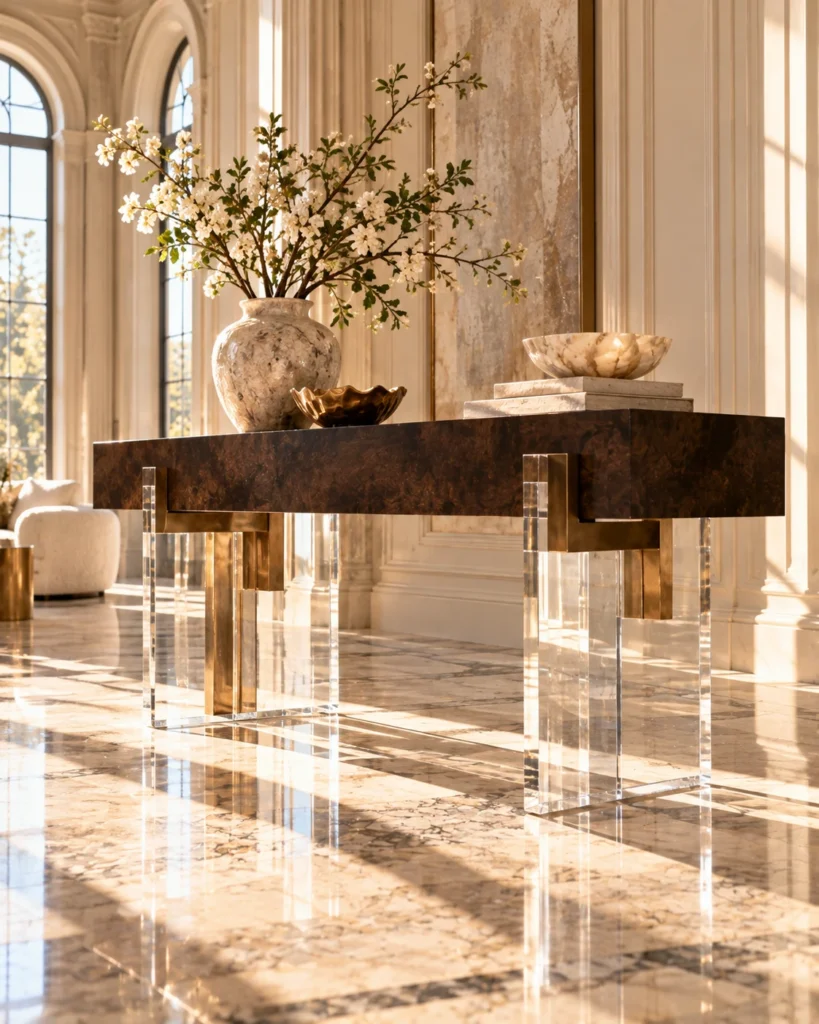
3. What Makes Acrylic Furniture So Complicated? · Interlude Home
Hook: The furniture you can barely even see is surprisingly REALLY hard to get right.
Acrylic furniture can look SO simple.
It’s clear. It’s clean.
Sometimes it almost disappears into the room.
But that transparency is exactly what makes it so unforgiving.
Because there is nowhere for anything to hide.
When we’re looking at a beautiful acrylic piece the clarity matters. The thickness matters. The edges matter. The way the pieces are joined together matters.
Any scratches, cloudiness, bubbles, messy seams, or imperfections can suddenly become VERY visible.
And then we have to think about the actual design of the piece.
One of the reasons I love seeing how Interlude Home uses acrylic is because they don’t just treat it as a way to make invisible furniture.
They combine it with other materials and use the transparency as part of the design.
And that can be such a useful tool for designers.
You might need a console in an entry but don’t want another visually heavy piece of furniture.
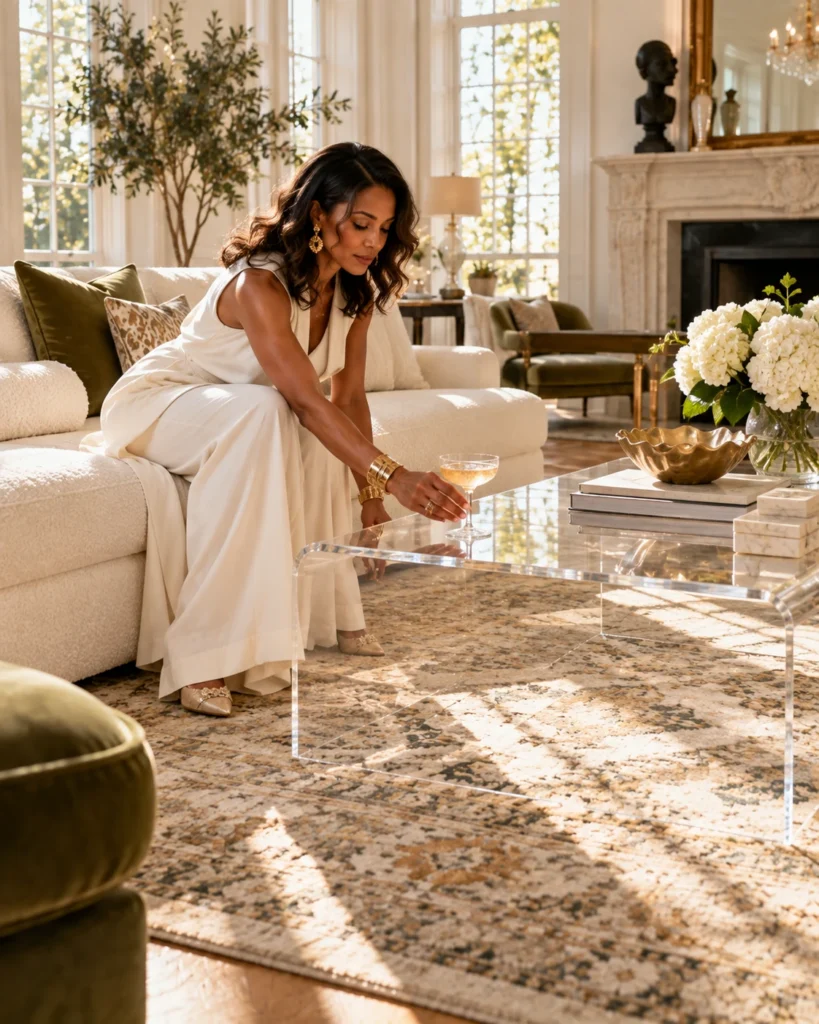
Or a cocktail table that lets you see the rug underneath it.
Maybe the room already has a LOT happening and you want something functional that doesn’t add another big visual block.
Acrylic can give us physical furniture without giving us the same visual weight.
BUT that doesn’t mean it disappears from the design.
Thickness, shape, scale, what we pair it with, and even what you can see THROUGH it all still matter.
It’s funny because acrylic furniture can look like one of the simplest things in a room.
But making something look THAT simple can actually be VERY complex and I have a whole lot of respect for that.
Caption
Acrylic furniture LOOKS simple but there is NOWHERE for bad craftsmanship to hide 👀 Clarity, thickness, polished edges, connections, ALL of it becomes immediately visible. I love how Interlude Home uses acrylic to give us something functional without adding a ton of visual weight to a room.
They are known for luxury contemporary furniture and accessories that play with materials like acrylic, glass, metals, and rich finishes to create pieces that feel sophisticated but still unexpected.
@interiordesigncommunity #idcvideo #interludehome #acrylicfurniture #furnituredesign
Assets
Press and hold any image on your phone to save it to your camera roll.

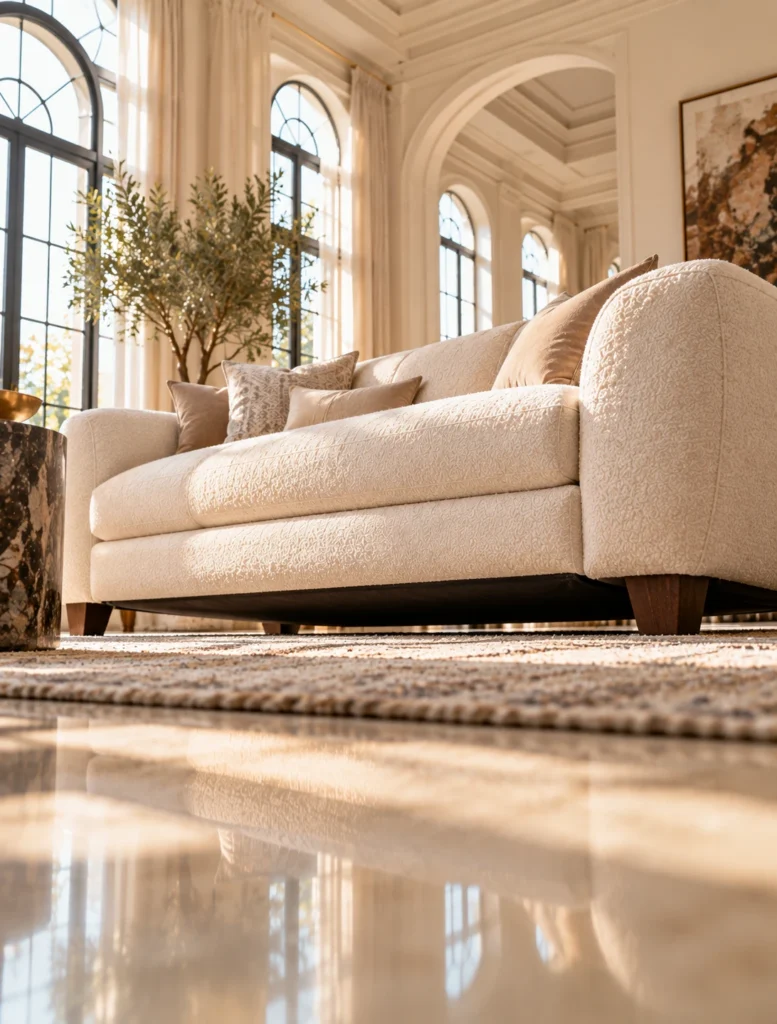
4. Why Your Sofa Has a Zipper Underneath It
Hook: Have you ever wondered what that weird zipper underneath your sofa is for? Did the company do it to give you an ultra secret hiding spot?
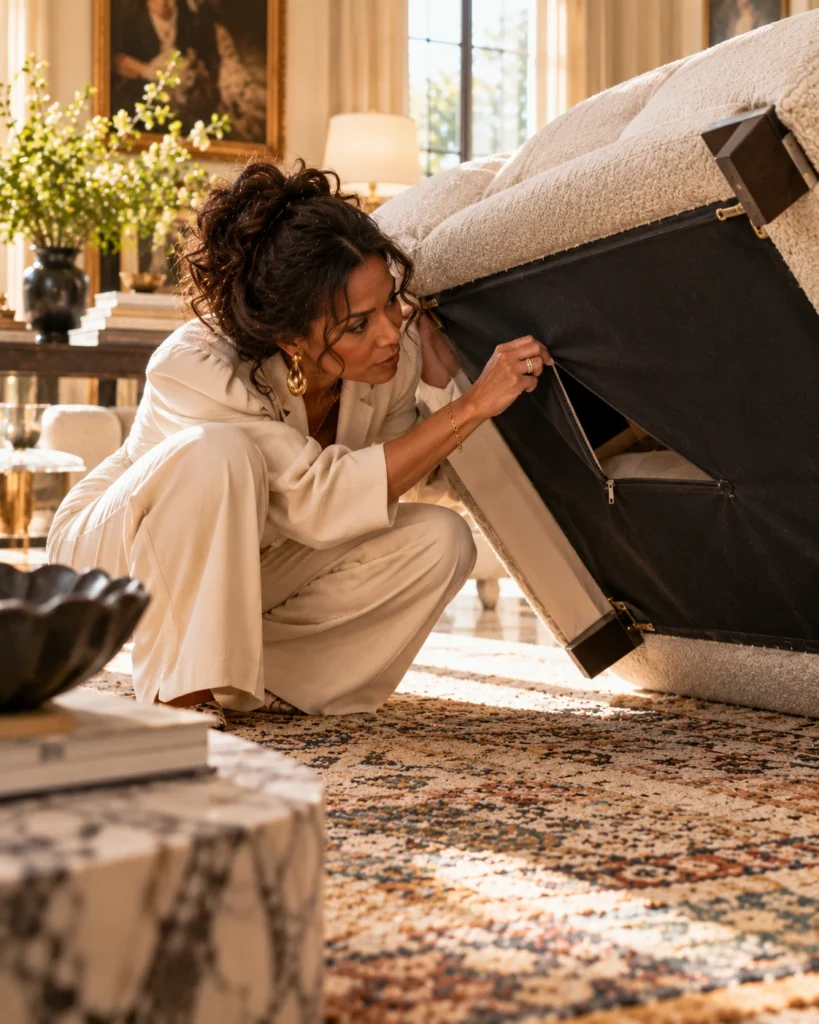
Go look underneath one of your upholstered sofas or chairs.
There is a good chance you’ll find a thin piece of fabric covering the bottom.
And depending on how the piece was constructed you may also find a zipper or another access point.
So WHY is all of that under there?
That bottom fabric is commonly called a dust cover.
And yes, one of its jobs is pretty much exactly what the name suggests.
It helps keep dust, pet hair, and all of the other lovely things floating around our homes from getting up inside the furniture.
But it also gives the underside a clean finished appearance while covering all of the construction guts.
Because THAT is where things get interesting.
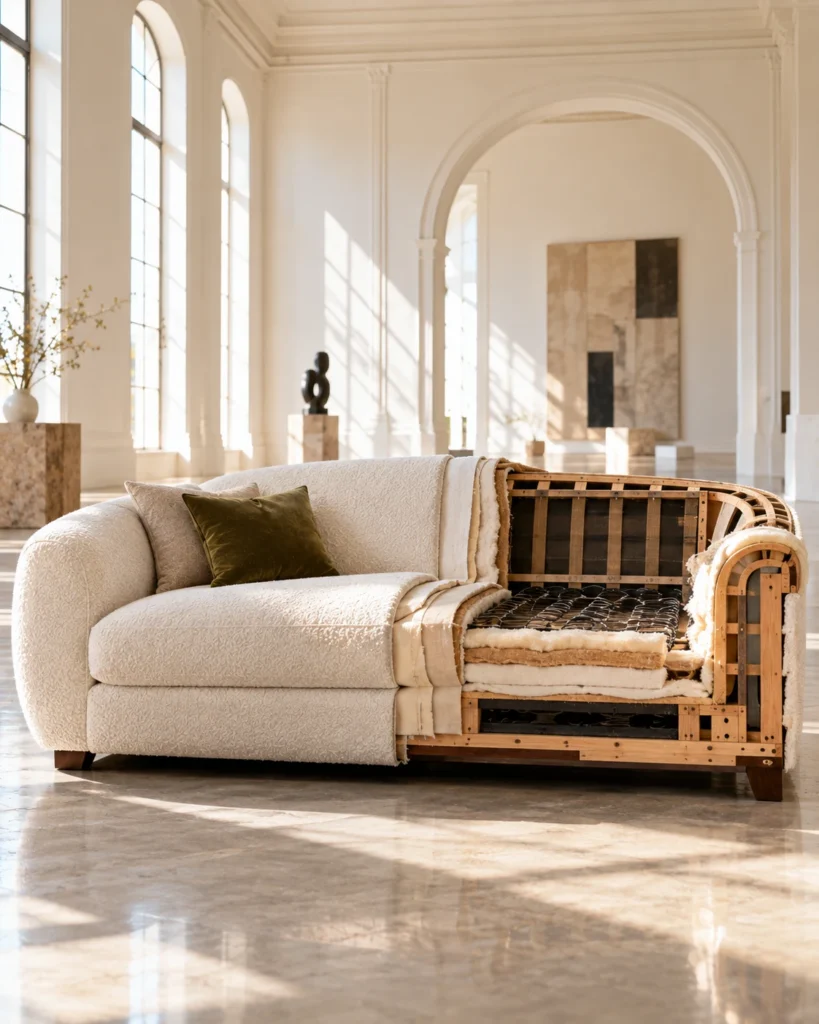
Underneath your upholstery are the parts actually supporting you.
The frame.
Springs or webbing depending on the construction.
Fasteners.
Support systems.
All of those things we never think about when we’re standing in a showroom touching the pretty fabric.
And sometimes manufacturers need a way to access that interior construction during manufacturing, assembly, inspection, or servicing.
Depending on the piece, that zipper or opening may provide access without having to remove the entire dust cover.
So NO, unfortunately they did not build you an ultra secret hiding spot.
This is why I always say there is SO much more to upholstered furniture than the fabric on the outside.
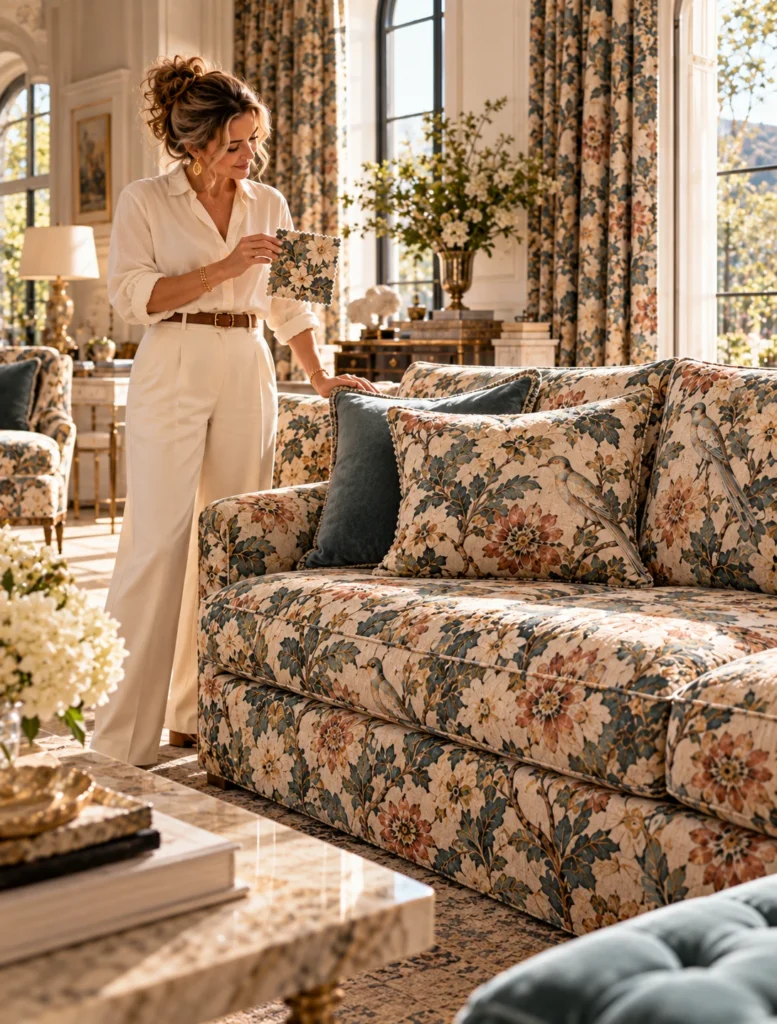
Two sofas can look incredibly similar sitting next to each other and be constructed VERY differently underneath.
The pretty part gets your attention.
But what’s hiding underneath it can tell us a whole lot more about how that piece was actually made and THAT is what truly matters!
Caption
Go look underneath your sofa… Go ahead, I’ll wait. We spend ALL this time choosing the pretty fabric while an entire construction story is hiding underneath us. Frames, springs, webbing, fasteners, dust covers…THAT stuff can tell us a whole lot about how the piece was actually made.
So YES go take a peek underneath your sofa and see what’s actually hiding down there, just don’t start dismantling it in the name of research 😂
@interiordesigncommunity #idcvideo #upholstery #furnituredesign #furnitureconstruction
Assets
Press and hold any image on your phone to save it to your camera roll.

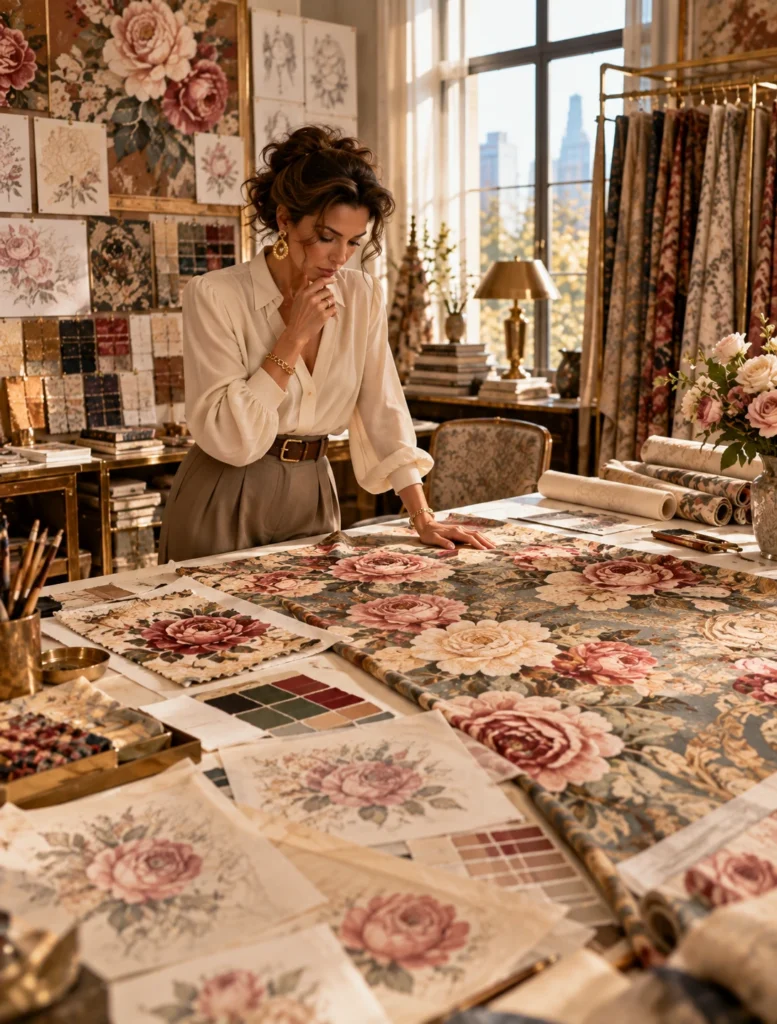
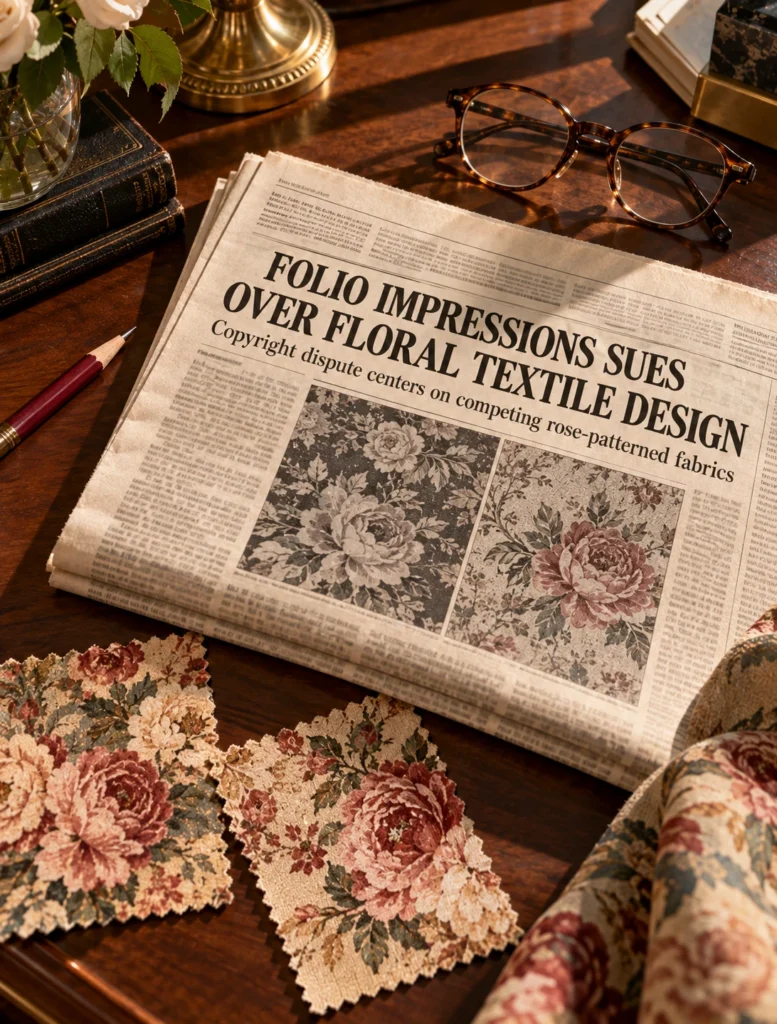
5. The Fabric That Started a Lawsuit
Hook: How similar can TWO fabrics look before somebody ends up in COURT?
Apparently similar enough that we have an actual lawsuit to talk about.
And buckle up designers this one is FASCINATING.
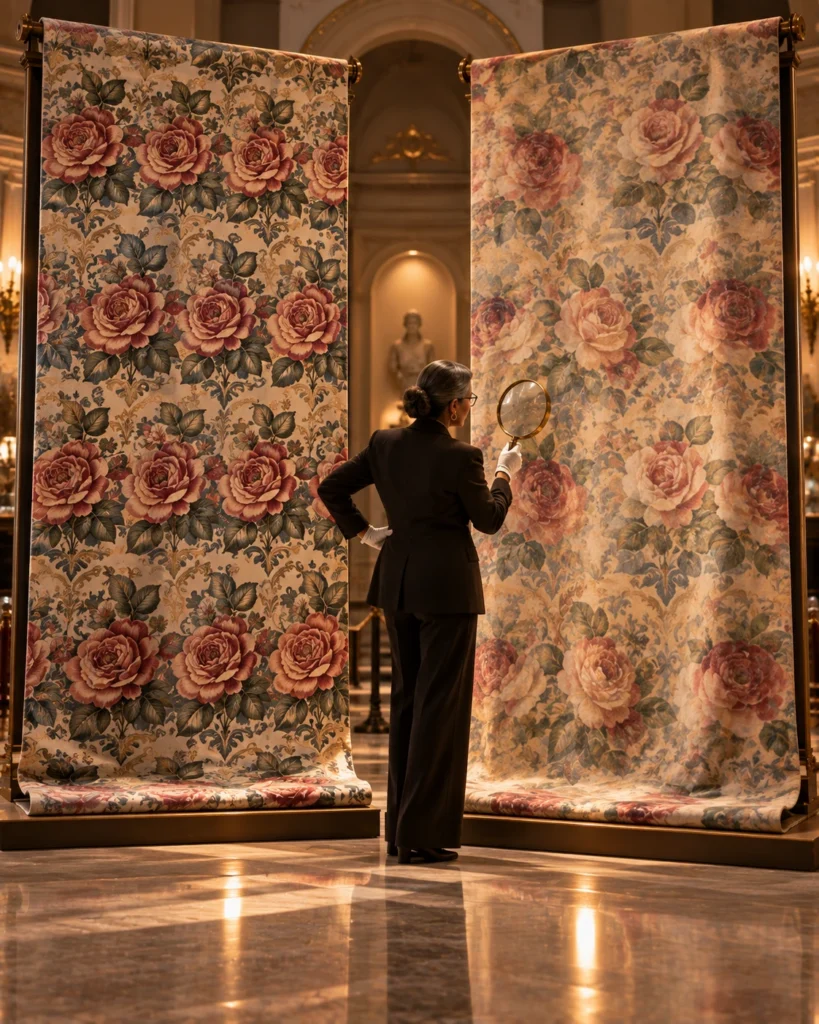
So apparently, back in the 80s a fabric company called Folio Impressions purchased the rights to a textile design created by an artist at a design studio in Lyon, France.
The pattern was called Pattern #1365 and featured roses arranged over an ornate background.
Folio started selling fabric printed with this design.
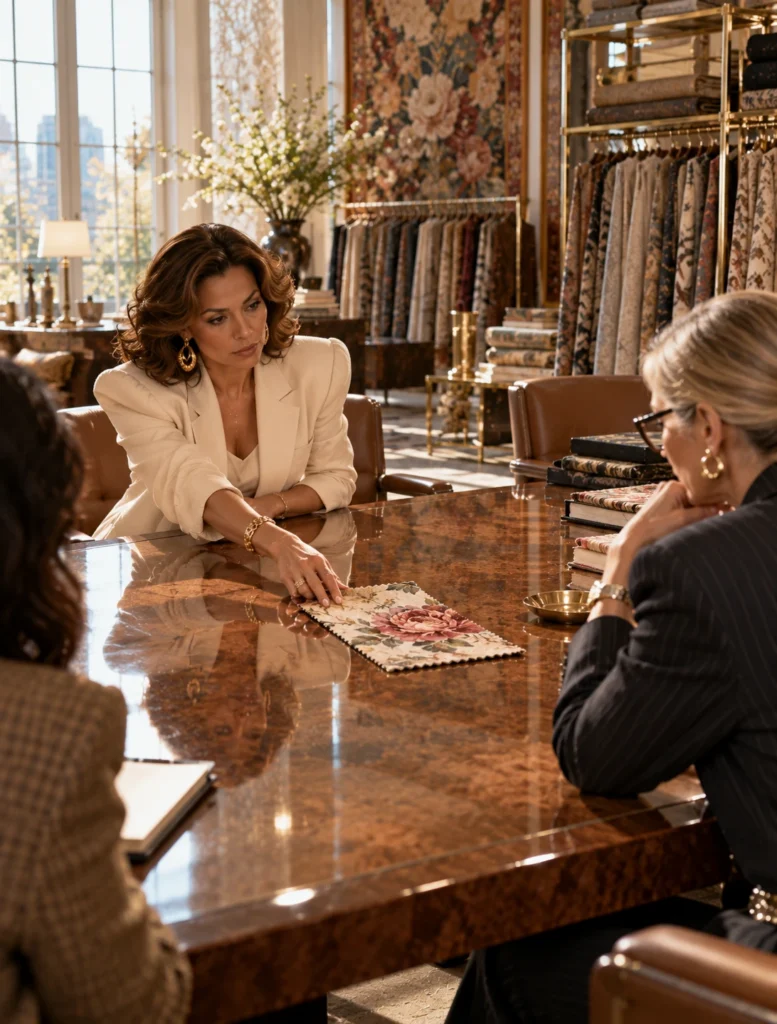
Then, get this, a clothing manufacturer called Byer California got a swatch of it.
Byer showed that swatch to another fabric company, Lida Manufacturing, and basically asked, “Do you have anything similar?”
They didn’t.
BUT Lida said they could CREATE something similar.
So… they did!
They called their version “Baroque Rose.”
Byer then started purchasing the fabric printed with Baroque Rose and using it to manufacture clothing.
You probably know where this is going. Folio said HOLD ON ONE MINUTE…
They sued for copyright infringement.
Now THIS is where it gets really interesting because the question wasn’t simply, “Do these two fabrics look alike?”
The courts had to break down what parts of Folio’s design were actually original and legally protected.
The rose? The way the roses were arranged? The ornate background?
Because you obviously can’t copyright the entire IDEA of putting roses on fabric.
Ultimately the court recognized copyright protection for certain original parts of Folio’s design but found that the competing Baroque Rose design wasn’t substantially similar enough in the legally relevant ways for Folio to win its infringement claim.
And I LOVE this case because it shows just how complicated the phrase “inspired by” can become in the design world.
We are CONSTANTLY looking at historical interiors, art, fashion, architecture, furniture, and textiles.
Design of course builds on what came before it. We are soaking in the inspo around us to dream up all of our great ideas.
But there can be a BIG difference between being INSPIRED BY an idea and COPYING someone’s protected creative work.
And apparently sometimes we need a judge to tell us exactly where that line is.
Also, props to Folio for even FINDING OUT someone had blurred that line long before everything was being blasted all over social media.
Caption
There is inspiration and then there is…HMM THAT LOOKS ODDLY FAMILIAR 👀 Design is constantly influenced by what came before it but intellectual property can make the line between inspiration and copying a LOT more complicated. Where do YOU think that line is?
@interiordesigncommunity #idcvideo #designindustry #designinspiration #interiordesignbusiness
Assets
Press and hold any image on your phone to save it to your camera roll.
6. How Decorative Lighting Gets Made · Fine Art Handcrafted Lighting
Hook: There’s a chance you might never look at a chandelier the same way after I tell you what actually goes into making one.
I absolutely LOVE decorative lighting.
Accessorize the ceiling? YES PLEASE.
But when we see a finished fixture hanging beautifully in a room it’s really easy to forget how many different things had to happen to get it to that point.
Because think about what we’re asking this ONE object to do.
It needs to be structurally sound.
It needs to be wired safely.
It needs to produce useful light.
AND we want it to be GORGEOUS.
Depending on the fixture there may be metal components that need to be formed, welded, cast, or finished.
There may be hand applied finishes.
Glass can be blown, cut, textured, or shaped.
Crystals or decorative pieces may need to be individually placed and assembled.
And THEN all of those beautiful components still have to become a functional light fixture.
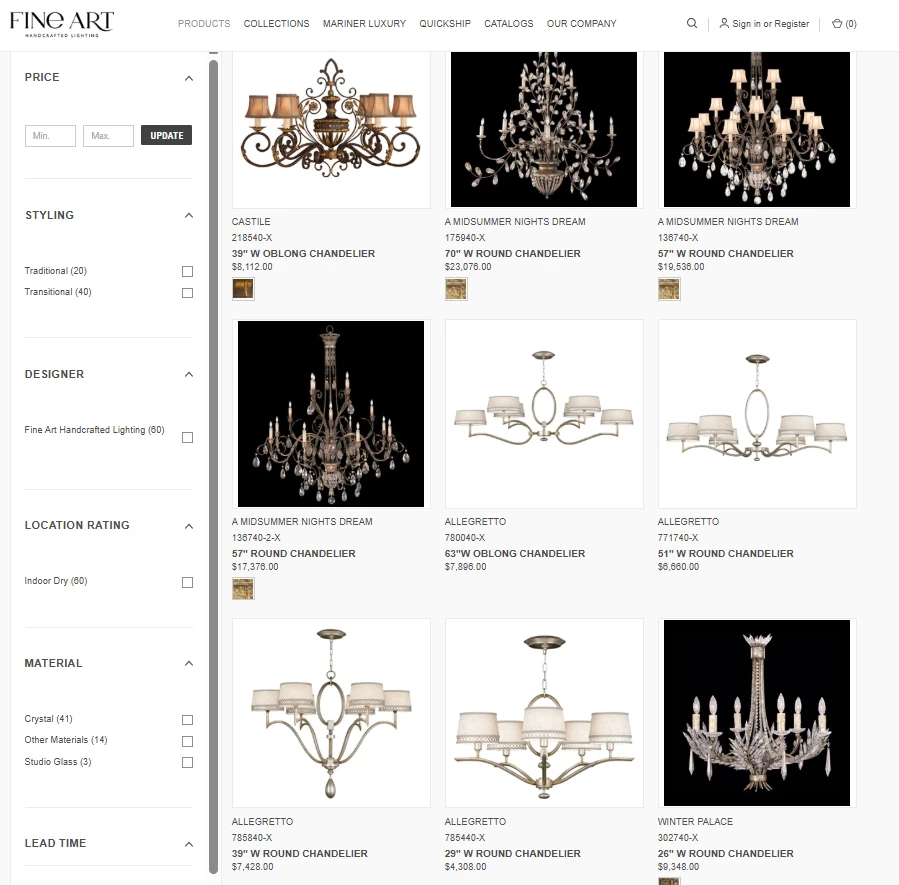
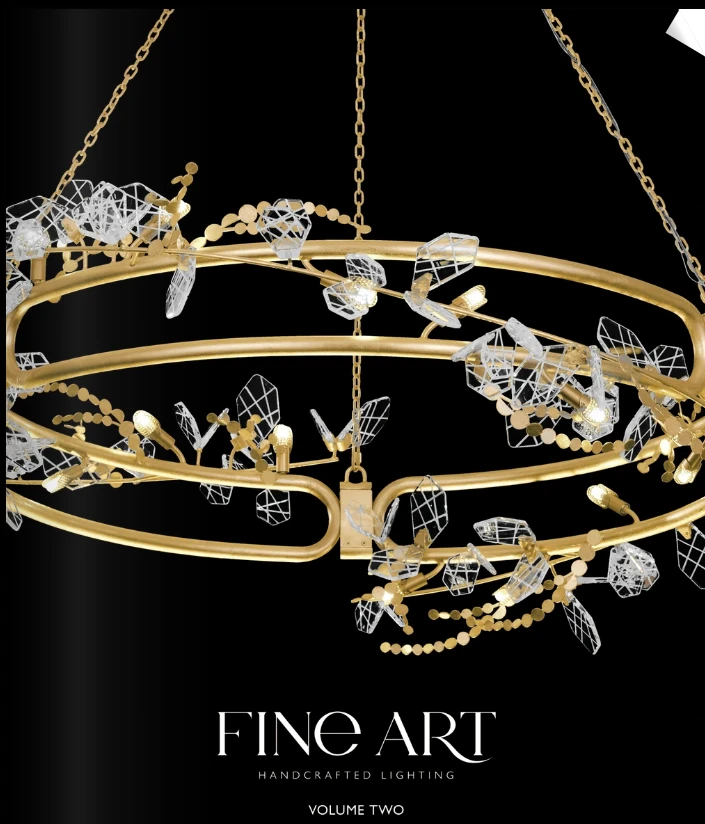
This is one reason I love looking at Fine Art Handcrafted Lighting.
They create high end decorative lighting that blends artisan craftsmanship, sculptural forms, and luxurious materials like hand finished metal, glass, and crystal and honestly, I’m in awe.
You can really see that intersection between decorative art and functional lighting.
Some fixtures almost read like sculpture when they’re turned OFF.
But as a designer I still have to think about what happens when we turn them ON.
Where does the light go?
How bright is it?
What kind of shadows does it create?
How much does the fixture weigh and what does that mean for installation?
There is SO much happening behind something we tend to describe as just being beautiful.
You need sculpture that lights up and safely hangs from your ceiling.
So, yes, it’s slightly more complicated than that but no big deal, I got it covered.
Caption
A chandelier can basically be sculpture, jewelry, AND electrical engineering hanging from your ceiling! Fine Art Handcrafted Lighting is a great example of how much craftsmanship can go into one beautiful fixture. Metalwork, glass, finishes, wiring, assembly…it’s doing a LOT more than holding a bulb 💡
They are known for luxury decorative lighting handcrafted by skilled artisans, combining sculptural designs with materials like hand finished metals, glass, and crystal. Check them out!
@interiordesigncommunity #idcvideo #finearthandcraftedlighting #lightingdesign #decorativelighting
Assets
Press and hold any image on your phone to save it to your camera roll.


7. Why Designers Obsess Over Dye Lots
Hook: You reordered the EXACT same wallpaper…so why the heck doesn’t it match? Don’t scream. I can help you.
This is one of those design problems that sounds completely ridiculous until it happens to you.
You ordered from the same manufacturer.
Same pattern.
Same color.
Same product number.
It should match EXACTLY, right?
Not necessarily.
First let me ease your mind. You’re NOT going crazy.
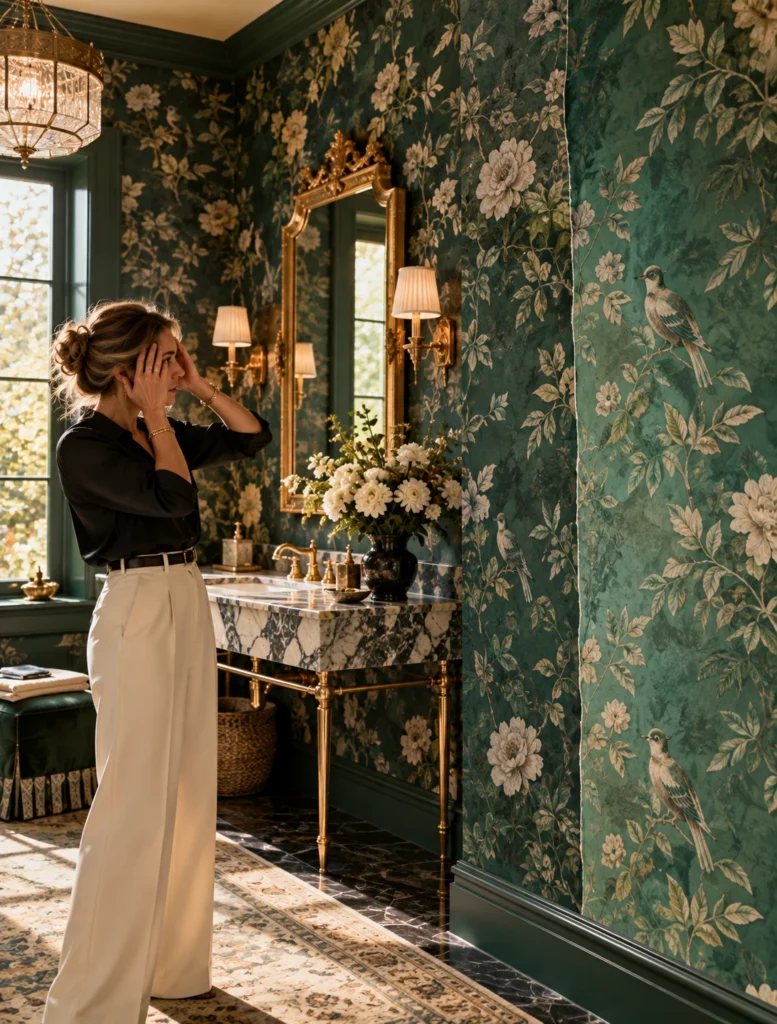
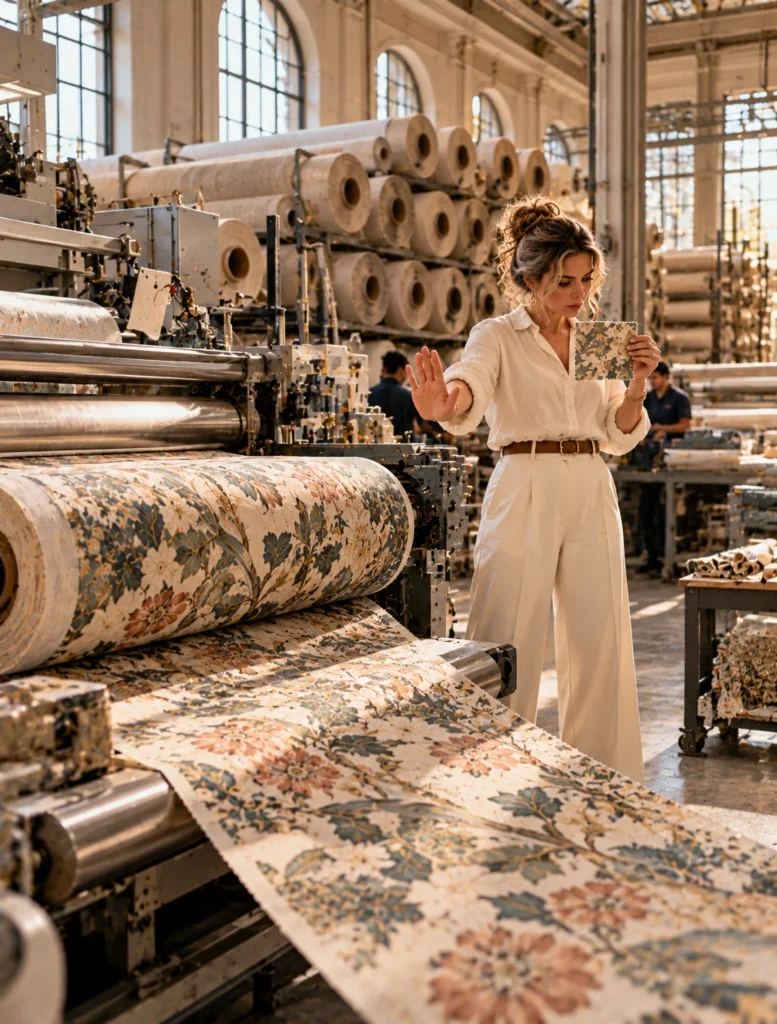
Because materials like fabric, wallpaper, carpet, and tile are produced in batches or runs.
And one production run may have tiny variations from another.
With dyed materials we often refer to those production batches as dye lots.
There can be subtle differences in color between them even though you’re technically buying the same product.
Maybe the raw materials varied slightly.
Maybe there were small differences in the dye process.
Temperature, chemistry, production conditions…there are a LOT of variables when we’re trying to reproduce color.
And sometimes you could look at two samples separately and swear they’re identical.
Put them right next to each other on the same wall or sofa?
NOW you see it.
This is why designers care about lot numbers and why we try to very carefully calculate how much material we need BEFORE we place the order.
Because if we run short the answer isn’t always as simple as ordering another roll or another few yards.
The next batch might not match perfectly.
This is also one of the reasons we order extra material for certain installations.
Yes, I know you only need 27 yards.
But if something happens three months from now you may be VERY happy that we have yard 28 sitting somewhere safe.
In situations like this over ordering isn’t necessarily waste. It’s insurance.
And if you DON’T end up needing it? Well…a matching throw pillow in your fabric could be lovely.
Caption
Same manufacturer. Same pattern. Same color. And somehow…IT DOESN’T MATCH 😵💫 This is why designers care SO much about dye lots and ordering enough material the FIRST time. Designers, have you ever been burned by a dye lot?
@interiordesigncommunity #idcvideo #dyelots #wallpaper #interiordesign
Assets
Press and hold any image on your phone to save it to your camera roll.

8. What Is a Strike-Off?
Hook: Imagine ordering 40 yards of custom fabric and THEN realizing the color is wrong.
NO THANK YOU.
And this is exactly why your designer does things like strike-offs.
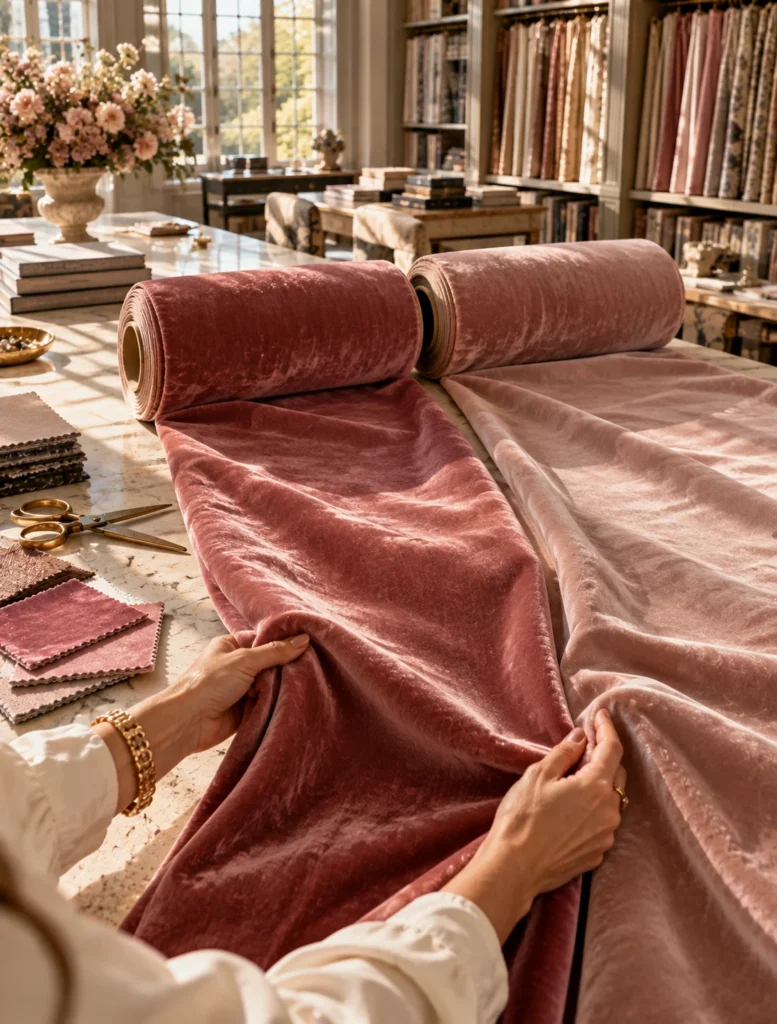
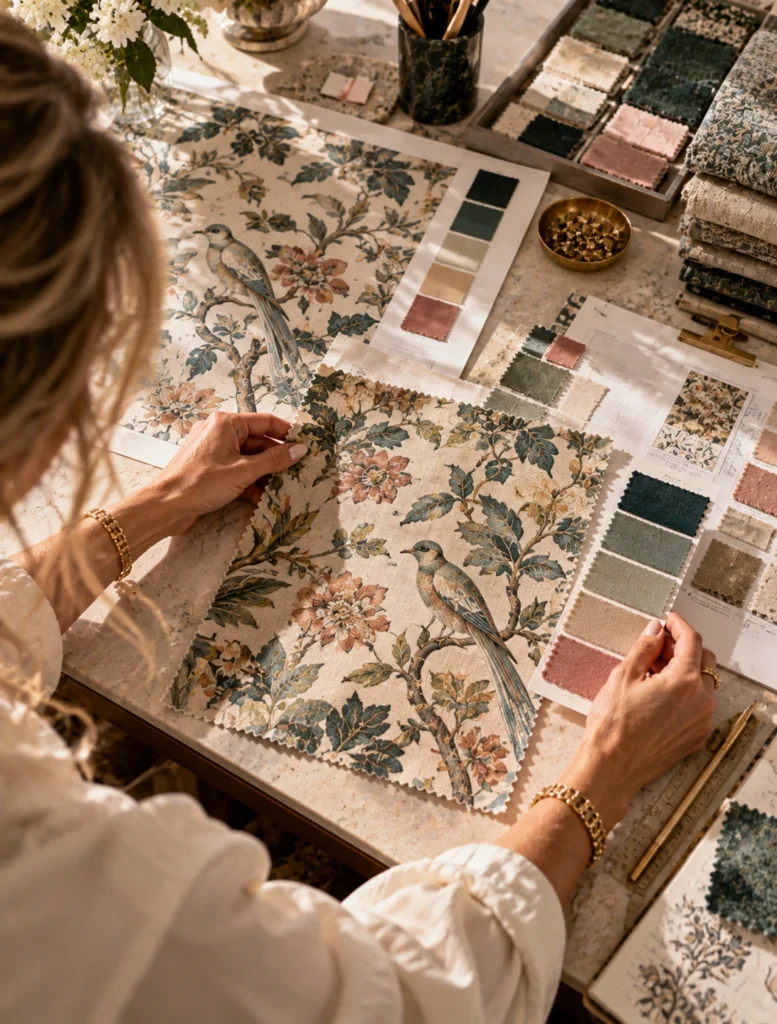
If we’re creating or customizing a fabric, wallpaper, carpet, or another patterned material we don’t necessarily want to jump straight from the design concept into full production.
Because what we see on a screen or in a design file doesn’t always translate EXACTLY the way we expect once ink, dye, fiber, material, and manufacturing get involved.
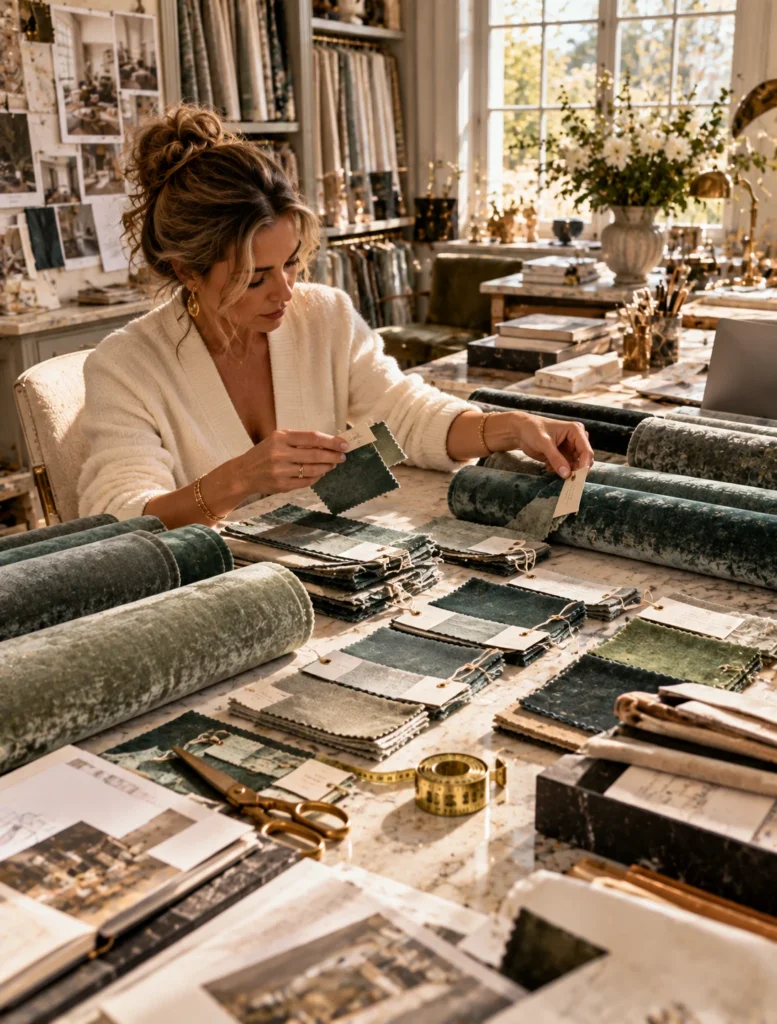
So a strike-off gives us an opportunity to see a smaller test version, a sample if you will, before we commit to the whole production run.
Now we can actually look at it in the flesh.
Is the color right?
Did that blue turn slightly purple?
Is the pattern reading the way we expected?
Is the scale right?
This is our chance to make an adjustment BEFORE someone produces yards and yards of this material.
And this is something as a client you don’t always see happening behind the scenes.
You may just see the final fabric show up and think, “Perfect!”
Meanwhile, I’m over here approving samples, checking colors, making revisions, and probably staring at two shades that looked identical to everyone else for WAY too long.
But that’s the point. And this is why you hired me!
We want to find the problem when it’s THIS itty bitty.
Not when 40 yards of it are sitting in your living room.
Designers can seem incredibly picky about samples and approvals.
And we ARE.
Because fixing the tiny sample is a whole lot easier than fixing the giant order and saves you a lot of stress!
Caption
Imagine ordering 40 yards of custom fabric and THEN realizing the color is wrong 😳 NO THANK YOU. A strike-off lets us catch those surprises BEFORE full production. It’s one of those tiny behind the scenes steps I’m taking that clients may never see so we can prevent a VERY expensive mistake later.
@interiordesigncommunity #idcvideo #customfabric #textiledesign #interiordesign
Assets
Press and hold any image on your phone to save it to your camera roll.
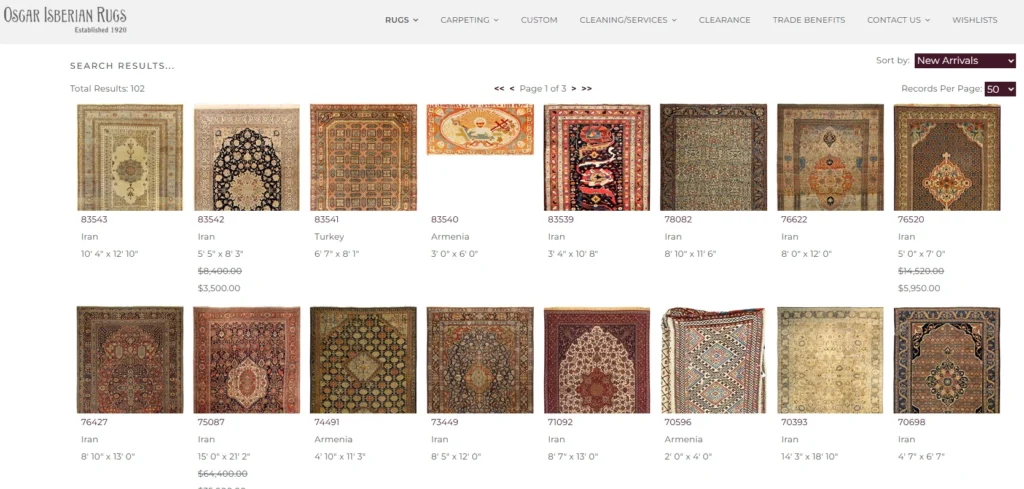
9. Why Do Some Rugs Cost $500 and Others $50,000? · Oscar Isberian Rugs
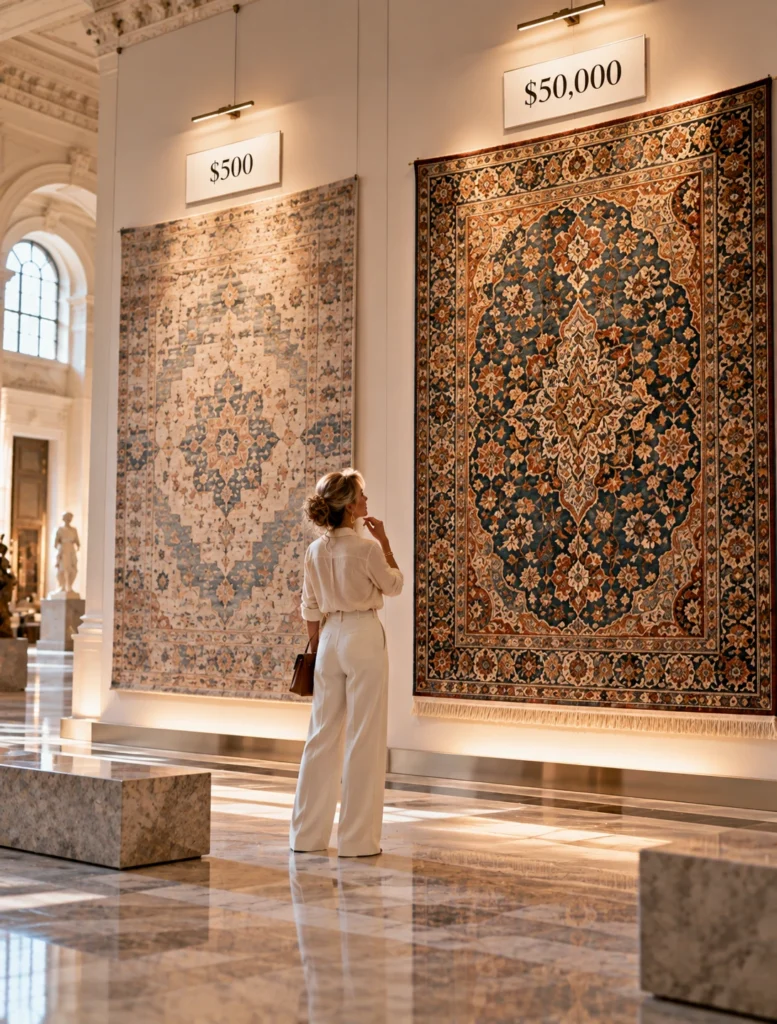
Hook: A $500 rug and a $50,000 rug can look REALLY similar…but let me tell you the difference.
I know you’re asking “what could possibly make one rug cost 100 TIMES more than another?”
I don’t blame you.
There isn’t one simple answer because there are SO many things that can affect the price of a rug.
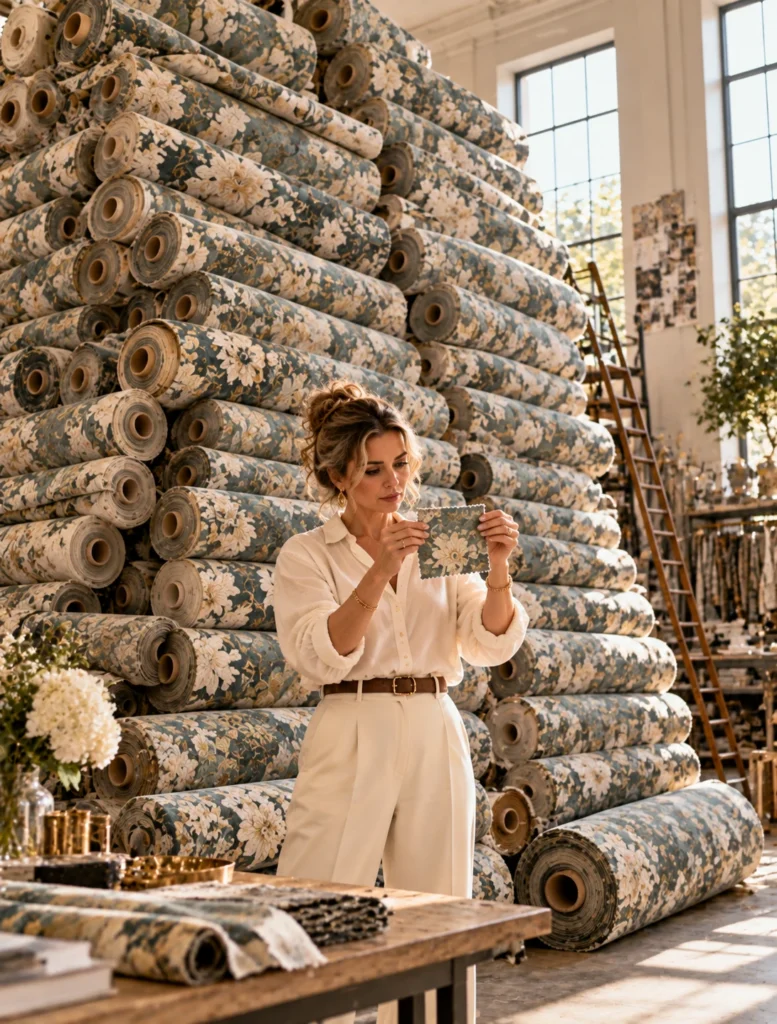
First, HOW was it made?
A machine made rug can be produced relatively quickly and sometimes inexpensively.
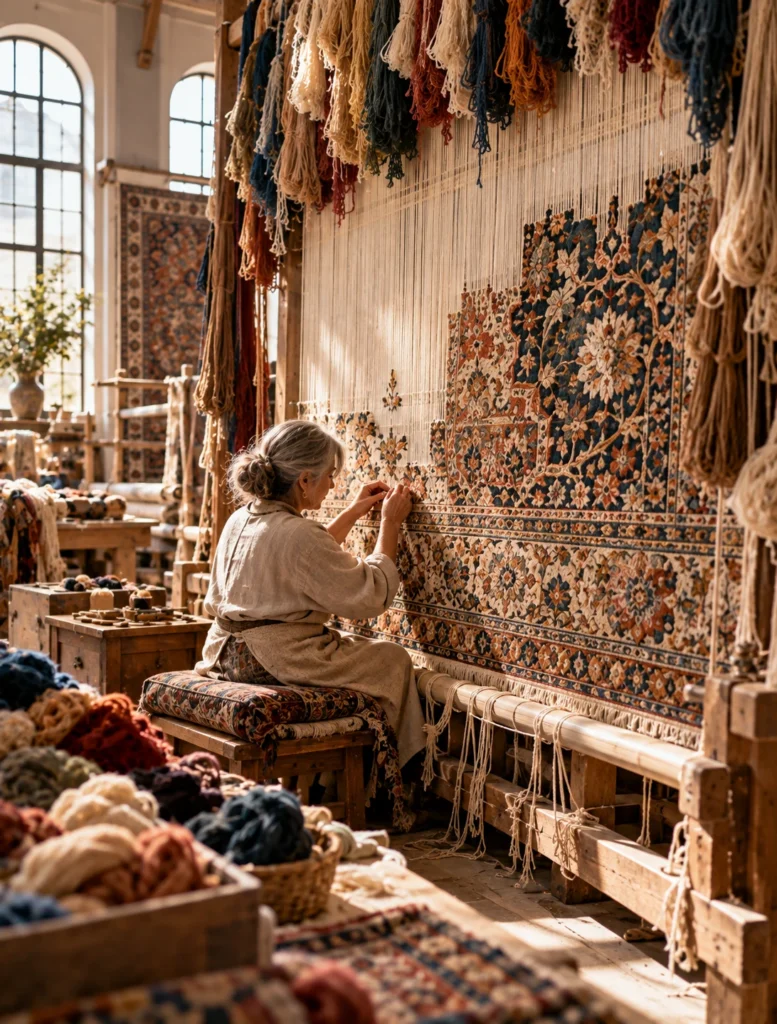
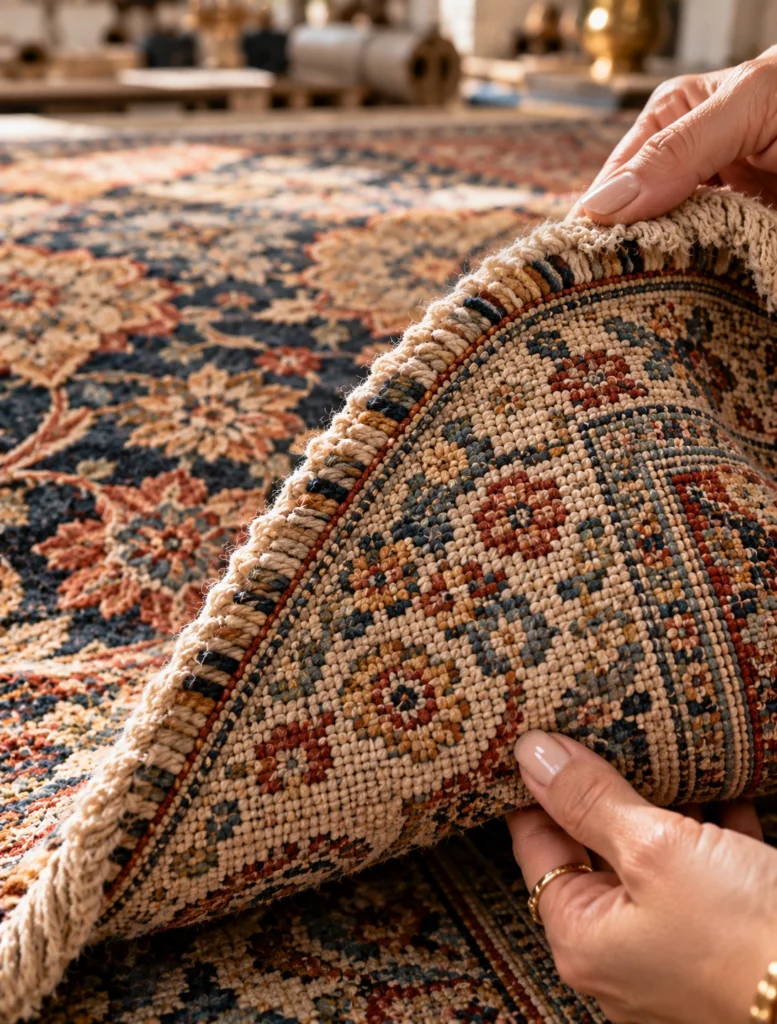
A hand knotted rug is literally being created knot by knot by the hands of skilled artisans and depending on the size and complexity that process can take MONTHS or even longer.
Then we get to the materials.
Wool, silk, cotton, synthetics, and different blends all have different costs and characteristics.
And even saying something is “wool” doesn’t tell us the whole story because the quality of that wool can vary too.
Then we start looking at the actual construction.
How many knots are there? How complicated is the pattern? What kind of dyes were used? How large is the rug?
And if we’re talking about antique or vintage rugs now we may also be considering age, origin, rarity, condition, and provenance.
THIS is why I love having experts like Oscar Isberian Rugs as a resource.
They’re known for fine handmade rugs. They offer everything from antique and traditional pieces to contemporary designs and what I love is they really have an emphasis on craftsmanship, quality, and artistry.
There is SO much more to understanding a rug than looking at the pattern and deciding whether it’s pretty.
BUT here’s the important part.
More expensive does NOT automatically mean better for YOUR project.
I still need to know where that rug is going, how the room is being used, what your budget is, and what we actually need that rug to do.
Sometimes the $500 rug IS the right choice.
And sometimes we ARE looking for the exceptional craftsmanship, materials, history, and artistry that comes with something completely different.
So the next time you see a rug with a $50,000 price tag and think WHO ON EARTH decided that?!
There may be a whole lot more woven into that price than meets the eye.
Caption
A $500 rug and a $50,000 rug can look REALLY similar until you know what you’re looking at. How it was made, materials, knotting, dyes, size, age, rarity, origin…there can be SO much woven into that price tag. This is why having experts like Oscar Isberian Rugs as a resource is SO valuable. Would YOU ever spend $50K on a rug? 👀
Oscar Isberian Rugs specializes in exceptional handmade rugs ranging from antique and traditional styles to modern designs, with a focus on quality materials, skilled craftsmanship, and distinctive artistry.
@interiordesigncommunity #idcvideo #oscarisberianrugs #handknottedrugs #rugdesign
Assets
Press and hold any image on your phone to save it to your camera roll.

10. Scope Creep Is Stressing Out Your Designer
Hook: This one might be hard to hear but clients we’ve gotta talk. That “one quick thing” you just asked your designer to do? It’s probably not one quick thing to them.
This is something called SCOPE CREEP and this is something that can quietly derail an entire design project.
And no this does NOT mean you’re not allowed to have another idea once your project starts.
PLEASE have ideas. We LOVE that you’re excited about your home! We are too!
This is YOUR home. I truly want you to love it. That’s why I’m in this business.
But there is a BIG difference between making thoughtful changes during the design process and continuously reopening decisions we’ve already made.
We approved the sofa.
Then we found the rug.
Then we chose the fabric based on the rug.
Then we selected the paint color that works with ALL of it.
But now you’re bringing us back to the sofa.
I mean okay….
BUT changing that ONE decision might mean we now need to revisit the rug, fabric, paint color which trickles down to pricing, lead times, drawings, or something else behind the scenes that depended on it.
THAT is where scope creep starts sneaking in.
Because your designer probably quoted your project based on an estimated amount of time and a certain number of revisions.
If I thought your project would take 40 hours and we’re suddenly at 70 because we’re making the same decisions three and four times not only does the original fee no longer cover the amount of work I’m actually doing but there is another part clients don’t always realize…
Designers schedule projects around each other.
My calendar is booked and while I absolutely build in some wiggle room pushing one project too far beyond its original timeline creates a domino effect.
I have another client starting after you based on the timeline we originally agreed to.
If your six month project becomes an eight month project because we keep reopening decisions now YOUR project is affecting THEIR project too.
And THAT is stressful for everyone. And sad for them.
So what can you do to help with this?
Take your time when we’re making the decision.
Ask questions.
Tell me when you’re unsure BEFORE we approve it.
And once we make a decision together, trust the process, and let us KEEP MOVING.
Of course things will change sometimes. That’s completely normal and again, I plan for some of that.
But constantly going backward makes it really hard for your designer to move your project forward.
And I promise we BOTH want to get to the part where you actually get to enjoy your beautiful house.
Caption
Clients, let’s talk. You are definitely ALLOWED to change your mind but when we continuously reopen decisions that were already approved that one little change can create HOURS of additional work behind the scenes. Your designer quoted your project and scheduled the next one based on an expected scope and timeline. So let’s work together. Don’t be afraid to ask questions, tell us when you’re unsure, and once we make the decision together TRUST THE PROCESS and let us keep moving because the finish line will be SO SPECIAL 👏
@interiordesigncommunity #idcvideo #scopecreep #clientexperience #interiordesignbusiness
Assets
Press and hold any image on your phone to save it to your camera roll.



Stuck on any of these?
Bring it to office hours, Tuesday at 12:00pm ET, or submit a question ahead of time on the hub.